How to Start an Embroidery Business in India

The embroidery industry in India is growing rapidly, driven by increasing demand for customized fashion, uniforms, branding, and designer clothing. From small boutiques to large garment manufacturers, embroidery has become an essential part of the textile and fashion industry.If you are planning to start your own embroidery business, this guide will help you understand the complete process—from choosing the right machine to finding customers and building a profitable business.

India has one of the world’s largest textile and garment markets, creating continuous demand for embroidery work. Today, customers prefer customized designs, personalized clothing, and premium finishing, making embroidery services highly valuable. Embroidery is widely used in:

  • Boutique and designer wear
  • School and college uniforms
  • Corporate branding and logos
  • Bridal collections
  • Kids wear and personalized gifts

Why Embroidery Business is a Great Opportunity in India

With low start up investment and strong demand, embroidery has become one of the most profitable small business opportunities in India.

Step 1: Understand Your Business Goal

Before starting, clearly define your business model.Ask yourself:

  • Will you work from home or open a shop?
  • Will you focus on custom orders or bulk production?
  • Who is your target audience?

You can start small and expand gradually as your business grows.Many beginners start with local boutique orders and later move into large-scale production.

Step 2: Choose the Right Embroidery Machine

Selecting the right machine is one of the most important decisions in your business journey.

Types of Embroidery Machines

Single Head Embroidery Machine

Best for:

  • Beginners
  • Home businesses
  • Small-scale production

These machines are affordable, easy to use, and ideal for customized work.

Multi Head Embroidery Machine

Best for:

  • Bulk orders
  • Garment factories
  • Large-scale businesses

They increase production speed and efficiency.

Reliable machines like Julee embroidery machines are widely preferred for their performance, durability, and beginner-friendly operation.

Step 3: Plan Your Budget

One of the biggest advantages of embroidery business is that it can be started with a moderate investment.

Your budget may include:

  • Embroidery machine
  • Threads and accessories
  • Computer/software
  • Workspace setup
  • Marketing expenses

Beginners can even start from home to reduce initial costs.

Step 4: Set Up Your Workspace

You don’t need a large commercial space initially.

A clean and organized workspace with:

  • Proper lighting
  • Stable power supply
  • Ventilation
  • Storage for threads and materials

is enough to start your embroidery business efficiently.

Step 5: Learn Basic Embroidery Skills

Even with modern computerized machines, basic knowledge is important.

Learn:

  • Machine operation
  • Thread handling
  • Design placement
  • Fabric types
  • Basic troubleshooting

Many embroidery machine suppliers, including Julee, provide training and technical guidance for beginners.

Step 6: Create Sample Designs

Before approaching customers, build a small portfolio.

Create samples such as:

  • Logo embroidery
  • Name embroidery
  • Floral patterns
  • Uniform designs

Take high-quality photos of your work for marketing purposes.

Good presentation increases customer trust.

Step 7: Find Your First Customers

Marketing plays a major role in growing your embroidery business.

Start with:

  • Friends and family
  • Local boutiques
  • Tailoring shops
  • Schools and colleges
  • Small businesses

You can also promote your work through:

  • Instagram
  • WhatsApp Business
  • Facebook pages
  • Google Business Profile

Social media is highly effective for embroidery businesses because visuals attract customers quickly.

Step 8: Focus on High-Demand Services

Some embroidery services are always in demand and offer better profit margins.

Popular services include:

  • School uniform logos
  • Company branding
  • Bridal embroidery
  • Kids name embroidery
  • Boutique customization

Customized products usually generate higher profits than standard designs.

Step 9: Improve Quality & Customer Service

Success in embroidery business depends heavily on quality and customer satisfaction.

Focus on:

  • Clean finishing
  • Accurate stitching
  • Timely delivery
  • Professional communication

Happy customers often become repeat clients and recommend your services to others.

Step 10: Scale Your Business

Once you start receiving regular orders, you can expand by:

  • Upgrading to multi-head machines
  • Hiring staff
  • Taking bulk garment orders
  • Offering online services

Investing in high-performance machines helps support long-term business growth.

Profit Potential in Embroidery Business

The embroidery business offers strong profit margins because:

  • Material costs are relatively low
  • Customized work adds premium value
  • Bulk orders increase income significantly

Many embroidery business owners in India earn anywhere between:

  • ₹30,000 to ₹1,00,000+ per month

depending on order volume and service quality.

Common Mistakes to Avoid

Buying the wrong machine
❌ Ignoring customer service
❌ Poor design quality
❌ Lack of marketing
❌ Underpricing your work

Consistency and professionalism are key to long-term success.

✅ Final Thoughts

Starting an embroidery business in India is a smart opportunity for anyone interested in creativity, fashion, and entrepreneurship. With the right machine, proper planning, and consistent effort, you can turn embroidery into a profitable and scalable business.

Whether you start from home or plan a larger setup, success depends on learning continuously, delivering quality work, and building strong customer relationships.
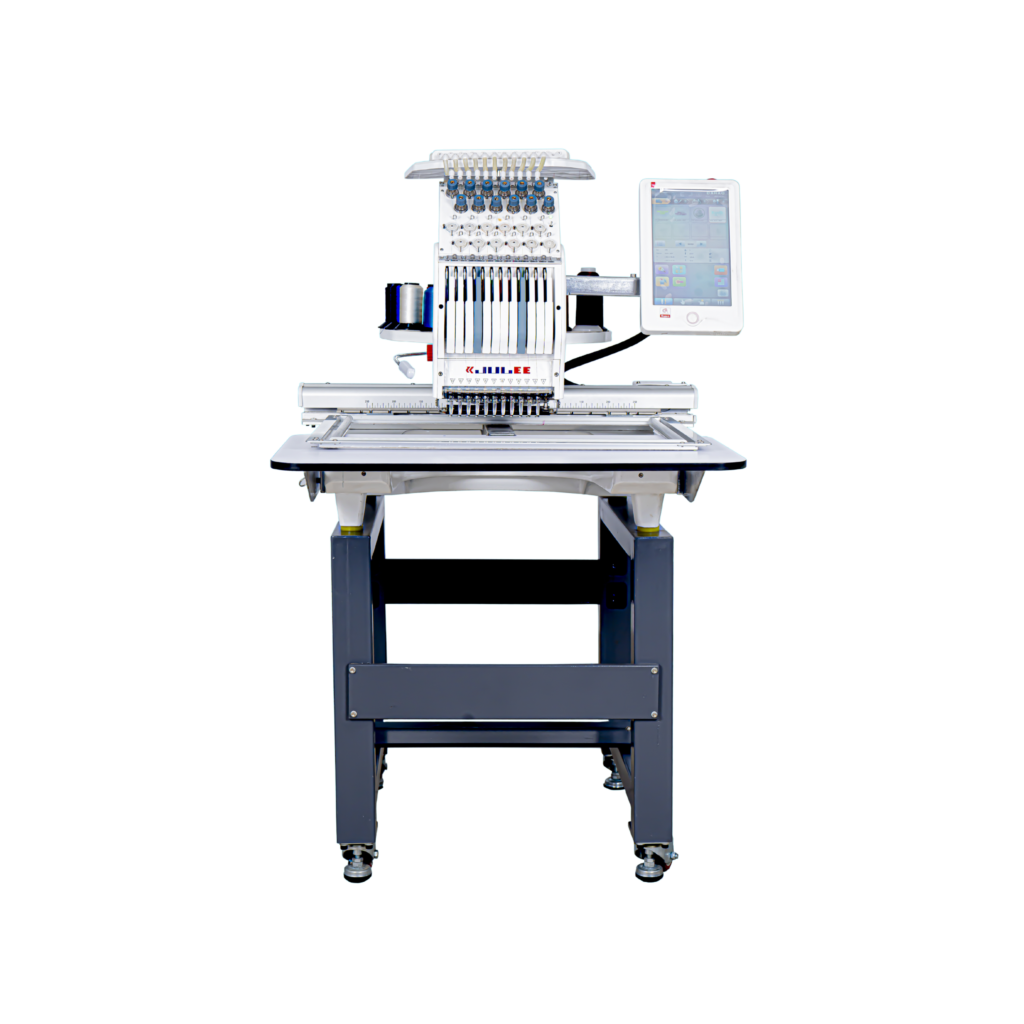
Top Model

Single Head

MId Model

Multi Head
FAQ

1. Is embroidery business profitable in India?

Yes, embroidery business is profitable in India due to the increasing demand for customized clothing, uniforms, boutique designs, and logo embroidery. With the right machine and proper marketing, it can generate steady income.

2. How much investment is needed to start an embroidery business?

The investment depends on the type of embroidery machine and business scale. Beginners can start with a single head embroidery machine and basic setup at a moderate investment.

3. Which embroidery machine is best for beginners?

Single head computerized embroidery machines are best for beginners because they are easy to operate, affordable, and suitable for small-scale production.

4.Is training necessary before starting an embroidery business?

Basic training is highly recommended because it helps you understand machine handling, troubleshooting, and design techniques more efficiently.

Proudly powered by WordPress

Zardozi Embroidery

The golden age of Zardozi embroidery in India began during the Mughal period.

  • It was introduced to India by Persian craftsmen who came with the Mughal emperors.
  • Emperor Akbar (1542–1605) played a key role in promoting and perfecting the art.
  • Zardozi was extensively used in:
    • Royal garments for kings, queens, and courtiers
    • Canopies and wall hangings for palaces
    • Decorated tents and scabbards (sword covers)
    • Ceremonial costumes and accessories

During this time, Zardozi became not just a craft but a symbol of status and luxury. Every stitch reflected the power, wealth, and artistic sensibility of the Mughal courts.

Decline After the Mughals

The decline of the Mughal Empire in the 18th century had a direct impact on Zardozi.

  • Without royal patronage, artisans lost their main source of livelihood.
  • The use of real gold and silver threads became unsustainable due to rising costs.
  • With the arrival of British colonial rule and industrialization, machine-made fabrics and cheaper alternatives became popular.
  • Many skilled Zardozi artisans were forced to give up their craft and turn to other professions, leading to a significant loss of heritage.

Revival of Zardozi in Modern India

Fortunately, Zardozi did not disappear completely. In the 20th century, revival efforts began:

  • The government and handicraft organizations recognized its cultural importance and supported artisans.
  • Instead of pure gold and silver, gilt wires (copper coated with gold or silver polish) were introduced to make Zardozi more affordable and accessible.
  • Today, Zardozi thrives in several parts of India, especially in:
    • Lucknow (Uttar Pradesh) – famous for its detailed Zardozi bridal wear
    • Hyderabad (Telangana) – known for royal-style patterns
    • Agra, Delhi, and Bhopal – other centers preserving the craft

Techniques and Materials Used in Zardozi

Traditional Zardozi is a labor-intensive craft. The process involves:

  1. Base Fabric – Rich fabrics like silk, velvet, or satin are used as the canvas.
  2. Frame (Adda) – The fabric is stretched tightly on a wooden frame to provide stability.
  3. Metallic Threads – Earlier pure gold and silver, now replaced with polished copper or synthetic metallic threads.
  4. Stitches and Work – Artisans use needles to attach wires, sequins, beads, pearls, and even semi-precious stones.
  5. Design Motifs – Inspired by nature (flowers, leaves, peacocks, vines), Mughal architecture (arches, domes), and geometric patterns.

The result is a three-dimensional raised effect, giving the embroidery a rich and opulent look.

Zardozi in Modern Fashion

Today, Zardozi continues to hold its place in both traditional and contemporary fashion:

  • Bridal Wear – Lehenga cholis, sarees, sherwanis heavily embellished with Zardozi are staples in Indian weddings.
  • Accessories – Handbags, clutches, shoes, and belts often feature Zardozi embroidery.
  • Home Décor – Cushion covers, wall panels, and curtains use Zardozi to add a regal touch.
  • Couture Fashion – Many Indian and international designers incorporate Zardozi in their collections for its timeless elegance.

The craft has transformed from being exclusive to royalty into something accessible yet still luxurious, keeping its cultural legacy alive.

Cultural Significance

Zardozi is more than just embroidery — it represents:

  • Heritage – A direct link to India’s Mughal past.
  • Artistry – A reflection of patience, skill, and creativity passed down through generations.
  • Identity – Recognition as a Geographical Indication (GI) craft in regions like Lucknow, helping artisans protect their traditional knowledge.

Regional Embroidery Styles in India & How Machines Are Revolutionizing Them

Introduction to Indian Embroidery Heritage

India has always been known as a land of textiles, colors, and intricate craft traditions. Among these, embroidery holds a special place. From ancient royal courts to rural households, embroidery has not only been a decorative art but also a form of storytelling, cultural expression, and identity. Each region of India has developed its own unique embroidery style, characterized by local materials, motifs, and techniques. Together, these styles form a vibrant tapestry of India’s rich cultural heritage.

But as times change, so does the way these crafts are practiced. While traditional hand embroidery remains unmatched in its delicacy and uniqueness, the demand for faster, scalable production has given rise to machine embroidery. Interestingly, embroidery machines are now being programmed to replicate regional Indian embroidery styles, bridging the gap between tradition and technology.

In this blog, we’ll explore some of the most iconic regional embroidery styles in India and how modern machines are adapting to preserve, scale, and innovate within these traditions.

Famous Regional Embroidery Styles of India

Phulkari (Punjab)

Phulkari, literally meaning “flower work,” originates from Punjab and has long been associated with celebrations, especially weddings. Traditionally, women would embroider Phulkari on handwoven fabrics like khaddar using silk threads in bright hues such as red, orange, and yellow.

  • Motifs & Stitches: Geometric floral patterns dominate Phulkari. The darning stitch is the most commonly used technique, worked on the wrong side of the cloth so the design appears on the right.
  • Cultural Significance: Phulkari is more than embroidery; it is a tradition passed down from mothers to daughters, symbolizing prosperity and love.

Today, machines can replicate Phulkari motifs using pre-programmed stitch patterns, making the designs accessible to global markets while still preserving their aesthetic charm.

Chikankari (Lucknow, Uttar Pradesh)

Delicate and elegant, Chikankari embroidery is one of India’s most refined forms of hand embroidery. Originating in Lucknow, it is believed to have been introduced by Mughal empress Nur Jahan in the 16th century.

  • Motifs & Stitches: Chikankari involves more than 30 types of stitches, including backstitch, chain stitch, and hemstitch. Floral patterns dominate, often worked with white thread on muslin or light fabrics.
  • Global Recognition: Chikankari garments are prized worldwide for their sophistication and understated beauty.

Modern machines now mimic Chikankari by using fine threads and digitized motifs. While machine work cannot replicate the same hand-drawn fluidity, it provides affordable and quicker alternatives for fashion industries.

Kantha (West Bengal & Odisha)

Kantha is one of the oldest forms of Indian embroidery, traditionally practiced by rural women in West Bengal and Odisha. The craft involves upcycling old saris and dhotis, layering them, and stitching them together with simple running stitches.

  • Motifs & Stitches: Kantha uses a running stitch to create motifs of animals, flowers, folklore, and daily life. It has a storytelling quality, where each piece narrates a tale.
  • Eco-Friendly Tradition: Kantha embodies sustainability as it emerged from reusing discarded fabrics.

Digitized Kantha designs on machines replicate the running stitch, creating quilts, dupattas, and home décor items on a large scale without losing the rustic charm.

Zardozi (Mughal Influence, North India)

Zardozi is a regal embroidery form that uses metallic threads, sequins, and beads. Flourishing during the Mughal period, Zardozi adorned royal garments, tents, and even furnishings.

  • Motifs & Stitches: Dense embroidery of vines, flowers, and geometric shapes using gold and silver threads.
  • Applications: Bridal wear, sherwanis, and luxury home textiles.

Machines replicate Zardozi using metallic threads and bead attachments, enabling mass production of glamorous designs while retaining their opulent appeal.

Other Regional Styles

  • Kasuti (Karnataka): Geometric patterns inspired by temple architecture, stitched with counting techniques that resemble weaving.
  • Kutch & Mirror Work (Gujarat & Rajasthan): Vibrant threads and small mirrors stitched onto fabric, reflecting light and energy.
  • Toda Embroidery (Tamil Nadu): Red and black wool on white cloth, creating bold geometric patterns.
  • Aari Work (Jammu & Kashmir): Hook-based chain stitches producing fine, flowing floral patterns.

Each of these regional embroidery styles has distinct features that are now being carefully digitized for machine embroidery.

Challenges of Preserving Traditional Embroidery

Despite its beauty, traditional embroidery faces several challenges:

  1. Decline of Hand Artisans: Younger generations often prefer modern careers, leading to fewer skilled artisans.
  2. High Labor Costs: Hand embroidery is time-intensive, making it expensive compared to machine-made alternatives.
  3. Risk of Losing Authenticity: With mass production, the originality and soul of handcrafted embroidery are at risk.

These challenges necessitate a balance between tradition and technology, where machines help sustain demand while artisans continue to innovate.

How Modern Machines Adapt to Traditional Styles

The evolution of embroidery machines has transformed how regional embroidery styles are reproduced. Here’s how:

  • Computerized Embroidery Machines: Modern machines use digitized designs where traditional motifs are scanned and programmed for precise replication.
  • Stitch Variety: Advanced machines can replicate darning stitches (for Phulkari), running stitches (for Kantha), and chain stitches (for Chikankari) with near accuracy.
  • Motif Digitization: Old handmade designs are preserved digitally, ensuring motifs are not lost over generations.
  • Faster Production: What once took weeks by hand can now be produced in hours, meeting global fashion demands.
  • Hybrid Approach: Many designers blend machine and hand embroidery—machines do the base, while artisans finish with hand detailing.

This collaboration between tradition and technology ensures that embroidery remains relevant in contemporary markets.

Future of Indian Embroidery with Technology

The future of embroidery in India lies in a fusion of heritage and innovation:

  • AI-Driven Design Customization: Artificial intelligence can predict consumer preferences and create embroidery motifs tailored for trends.
  • Sustainable Fabrics: Machine embroidery on organic fabrics supports eco-friendly fashion.
  • Empowering Artisans: Digital platforms allow artisans to collaborate with tech-driven embroidery businesses, expanding their reach.
  • Global Recognition: With machines standardizing embroidery patterns, Indian motifs gain more visibility on the international stage.

The future doesn’t replace artisans; instead, it provides them with tools to amplify their skills and markets.