blog 7 coverage img

Best Fabrics for Machine Embroidery
Best Fabrics for Machine Embroidery

Best Fabrics

Choosing the right fabric is one of the most important factors in achieving high-quality machine embroidery. Even the best embroidery machine cannot deliver professional results if the fabric is not suitable for embroidery work. Different fabrics behave differently during stitching, and selecting the correct material helps improve design quality, durability, and finishing. Whether you are a beginner or running an embroidery business, understanding the best fabrics for machine embroidery can help you avoid common mistakes and produce professional results

Why Fabric Selection Matters in Machine Embroidery

Fabric directly affects:

  • Stitch quality
  • Design clarity
  • Thread tension
  • Fabric stability
  • Overall embroidery appearance

Using the wrong fabric can cause puckering, thread breakage, uneven stitching, or poor design finishing. High-quality embroidery starts with the right fabric choice.
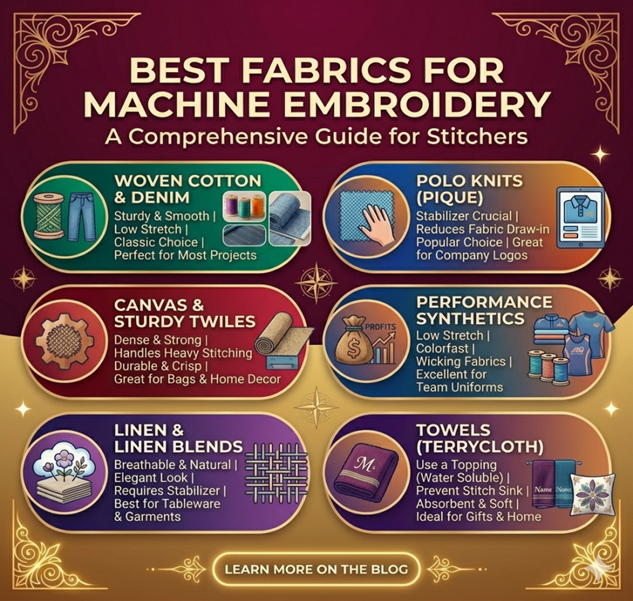
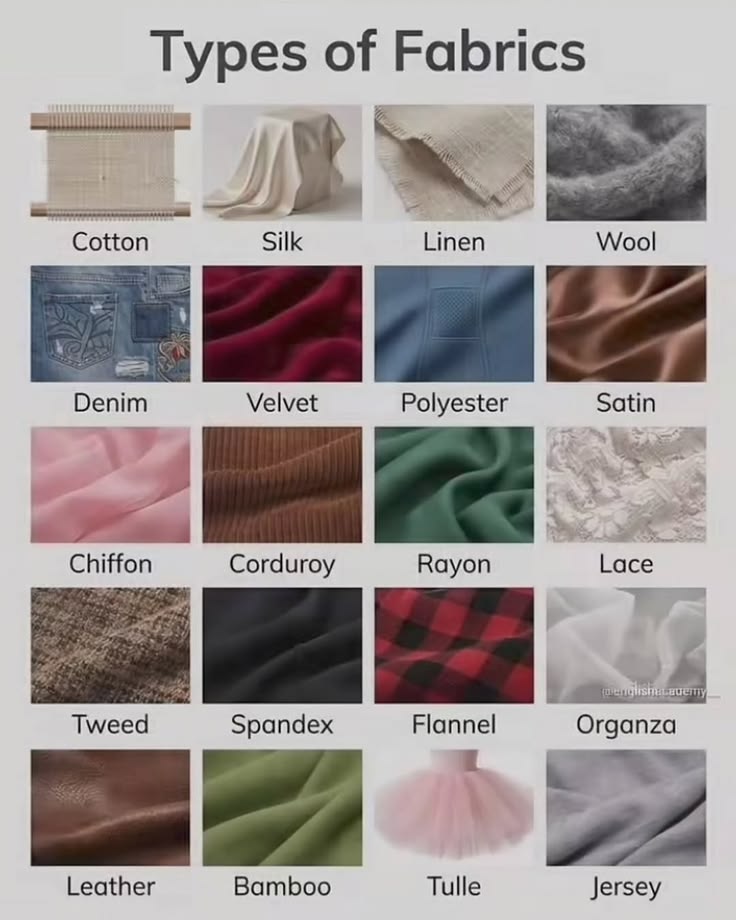
1. Cotton Fabric – Best for Beginners

Cotton is one of the most commonly used fabrics for machine embroidery because it is stable, easy to handle, and beginner-friendly.

 Benefits:

  • Smooth embroidery surface
  • Minimal stretching
  • Easy hooping process
  • Suitable for detailed designs

 Best Used For:

  • T-shirts
  • Kurtis
  • Kids wear
  • Customized clothing

Cotton works exceptionally well with computerized embroidery machines.

2. Linen Fabric – Elegant & Professional

Linen is a premium fabric known for its natural texture and elegant appearance. It produces beautiful embroidery results when handled correctly.

Benefits:

  • Strong and durable
  • Premium look
  • Excellent thread visibility

Best Used For:

  • Designer wear
  • Home décor items
  • Boutique collections

Proper stabilizers are recommended while embroidering on linen.

3. Denim Fabric – Durable & Stylish

Denim is widely used for bold and fashionable embroidery designs.

Benefits:

  • Thick and stable fabric
  • Ideal for heavy embroidery
  • Durable for long-term use

Best Used For:

  • Jackets
  • Jeans
  • Bags
  • Fashion wear

Denim supports logo embroidery and creative customized designs very well.

4. Silk Fabric – Premium Embroidery Finish

Silk creates luxurious embroidery results and is commonly used in bridal and festive collections.

Benefits:

  • Rich appearance
  • Smooth embroidery finish
  • Premium customer appeal

Best Used For:

  • Sarees
  • Bridal wear
  • Designer outfits

Silk requires careful handling and proper machine tension settings.

5. Polyester Fabric – Commercial & Uniform Use

Polyester fabrics are commonly used in uniforms and corporate garments because of their durability and wrinkle resistance.

Benefits:

  • Strong and long-lasting
  • Easy maintenance
  • Suitable for logo embroidery

Best Used For:

  • School uniforms
  • Company uniforms
  • Sportswear

Polyester performs well for bulk embroidery production.

6. Fleece & Knit Fabrics – Soft & Comfortable

Soft fabrics like fleece and knit materials are popular in winter wear and casual clothing.

Benefits:

  • Comfortable texture
  • Good for decorative embroidery
  • Attractive design finish

Best Used For:

  • Hoodies
  • Sweatshirts
  • Baby clothing

Using proper stabilizers is important to avoid fabric stretching.

Importance of Stabilizers in Embroidery

No matter which fabric you choose, stabilizers are essential for maintaining fabric stability during embroidery.

Stabilizers help:

  • Prevent puckering
  • Improve stitch quality
  • Maintain design accuracy
  • Support delicate fabrics

Choosing the right stabilizer improves overall embroidery performance significantly.

Choosing the Right Fabric for Your Business

When selecting fabric for embroidery, consider:

  • Fabric thickness
  • Stretch ability
  • Design complexity
  • End-use product
  • Customer preference

Businesses using reliable machines like Julee embroidery machines can achieve excellent results on multiple fabric types with proper settings and techniques.

Common Mistakes to Avoid

❌ Using unstable fabrics without stabilizers
❌ Ignoring fabric thickness
❌ Incorrect thread tension settings
❌ Using unsuitable needles

Proper fabric selection improves embroidery quality and customer satisfaction.

Final Thoughts

The success of machine embroidery depends not only on the machine but also on choosing the right fabric. Cotton, linen, denim, silk, polyester, and knit fabrics each offer unique advantages for different embroidery applications.

Understanding fabric behavior, using proper stabilizers, and maintaining correct machine settings will help you achieve professional-quality embroidery results consistently.

Whether you are creating customized fashion, uniforms, or boutique collections, selecting the best fabric is the first step toward beautiful and durable embroidery work.


FAQ’s

1. Which fabric is best for beginners in machine embroidery?

Cotton fabric is considered the best option for beginners because it is stable, easy to handle, and supports clean embroidery stitching.


2. Can embroidery be done on stretch fabrics?

Yes, embroidery can be done on stretch fabrics like knit and fleece materials, but proper stabilizers are required to prevent stretching and puckering.


3. Why are stabilizers important in machine embroidery?

Stabilizers help maintain fabric stability, improve stitch quality, and prevent embroidery designs from becoming distorted during stitching.


4. Is denim suitable for machine embroidery?

Yes, denim is an excellent fabric for embroidery because it is thick, durable, and ideal for bold designs and logo embroidery.

Proudly powered by WordPress

blog6

Why Choose Computerized Embroidery Machines?

Introduction

In today’s fast-growing textile and fashion industry, computerized embroidery machines have become an essential tool for businesses looking to improve productivity, design quality, and profitability.

What is a Computerized Embroidery Machine?

A computerized embroidery machine is an advanced system that uses digital technology to create precise embroidery designs with minimal manual effort.

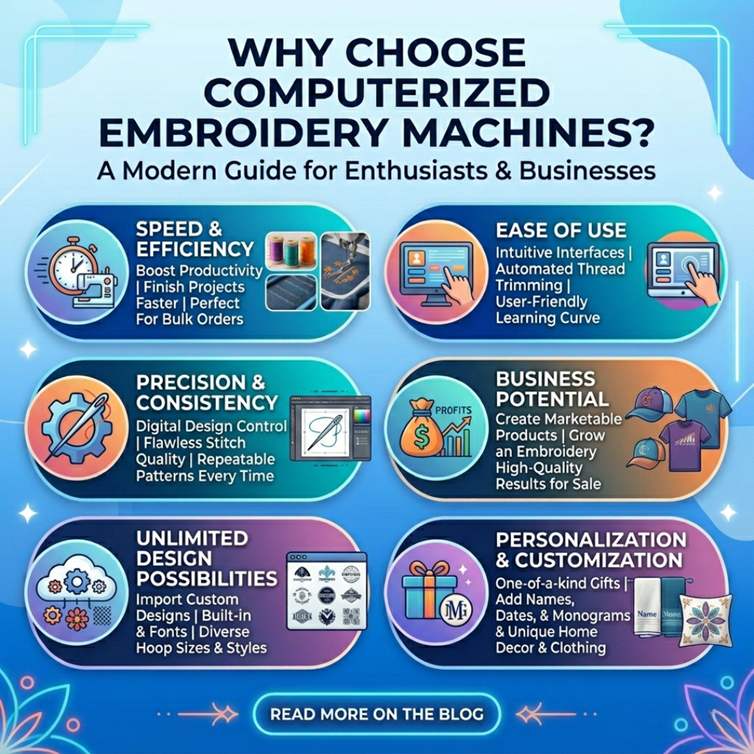
Faster Production Speed

Computerized embroidery machines complete embroidery work much faster than manual methods, helping businesses increase production and handle bulk orders efficiently.

High Precision & Professional Quality

These machines provide clean stitching, consistent embroidery quality, and accurate logo designs with reduced human errors.

Increased Business Profitability

By reducing labor costs and improving production speed, computerized embroidery machines help businesses increase profits and productivity.

Easy Design Customization

Users can upload custom embroidery designs, create personalized logos, and modify patterns easily using computerized embroidery systems.

Beginner-Friendly Operation

Modern embroidery machines include touch screen controls, USB support, and automatic functions that make operation simple for beginners.

Suitable for Multiple Industries

Computerized embroidery machines are widely used in boutiques, garment industries, branding businesses, school uniforms, and bridal collections.

Time-Saving Automation

Automatic thread cutting, color changing, and digital controls reduce manual work and improve workflow efficiency.

Business Growth & Scalability

These machines support business expansion by handling large orders and continuous production efficiently.

Blog6

Final Thoughts

Computerized embroidery machines are a smart investment for businesses looking to improve quality, speed, and profitability in the embroidery industry.

FAQ’s

Embroidery Machine

Go to Product ↗

Blog 5 coverage

30 Days Challenge to Start an Embroidery Business

Week 1: Learn the Basics

Week 2: Machine Setup & Practice

Week 3: Create Sample Designs

Week 4: Start Marketing & Get Orders

Income & Growth Opportunity

Final Thoughts

Starting an embroidery business does not require a huge investment or years of experience. With dedication, practice, and the right machine, you can successfully launch your embroidery business in just 30 days.

Take one step every day, stay consistent, and turn your creativity into a profitable business opportunity.

FAQ

1. How long does it take to learn embroidery machine operation?

With proper training and practice, beginners can learn basic embroidery machine operation within a few days to a few weeks

2.What are the benefits of computerized embroidery machines?

Computerized embroidery machines offer:

  • Faster production
  • Better accuracy
  • Easy design customization
  • Automatic functions
  • Improved productivity

3. Is technical support important when buying an embroidery machine?

Yes, good after-sales support and training are very important, especially for beginners. Reliable support helps avoid downtime and improves productivity

4. Can I expand my embroidery business in the future?

Absolutely. You can start small and later expand into bulk production, advanced designs, and multi-head embroidery machines as your business grows.

GET IN TOUCH

Schedule a Demo

How to Start an Embroidery Business in India

The embroidery industry in India is growing rapidly, driven by increasing demand for customized fashion, uniforms, branding, and designer clothing. From small boutiques to large garment manufacturers, embroidery has become an essential part of the textile and fashion industry.If you are planning to start your own embroidery business, this guide will help you understand the complete process—from choosing the right machine to finding customers and building a profitable business.

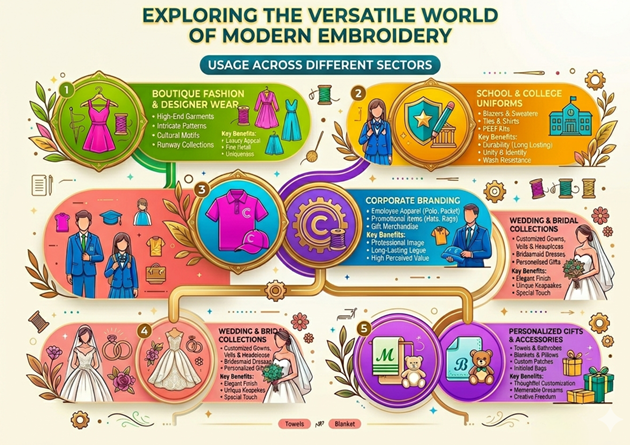
India has one of the world’s largest textile and garment markets, creating continuous demand for embroidery work. Today, customers prefer customized designs, personalized clothing, and premium finishing, making embroidery services highly valuable. Embroidery is widely used in:

  • Boutique and designer wear
  • School and college uniforms
  • Corporate branding and logos
  • Bridal collections
  • Kids wear and personalized gifts

Why Embroidery Business is a Great Opportunity in India

With low start up investment and strong demand, embroidery has become one of the most profitable small business opportunities in India.

Step 1: Understand Your Business Goal

Before starting, clearly define your business model.Ask yourself:

  • Will you work from home or open a shop?
  • Will you focus on custom orders or bulk production?
  • Who is your target audience?

You can start small and expand gradually as your business grows.Many beginners start with local boutique orders and later move into large-scale production.

Step 2: Choose the Right Embroidery Machine

Selecting the right machine is one of the most important decisions in your business journey.

Types of Embroidery Machines

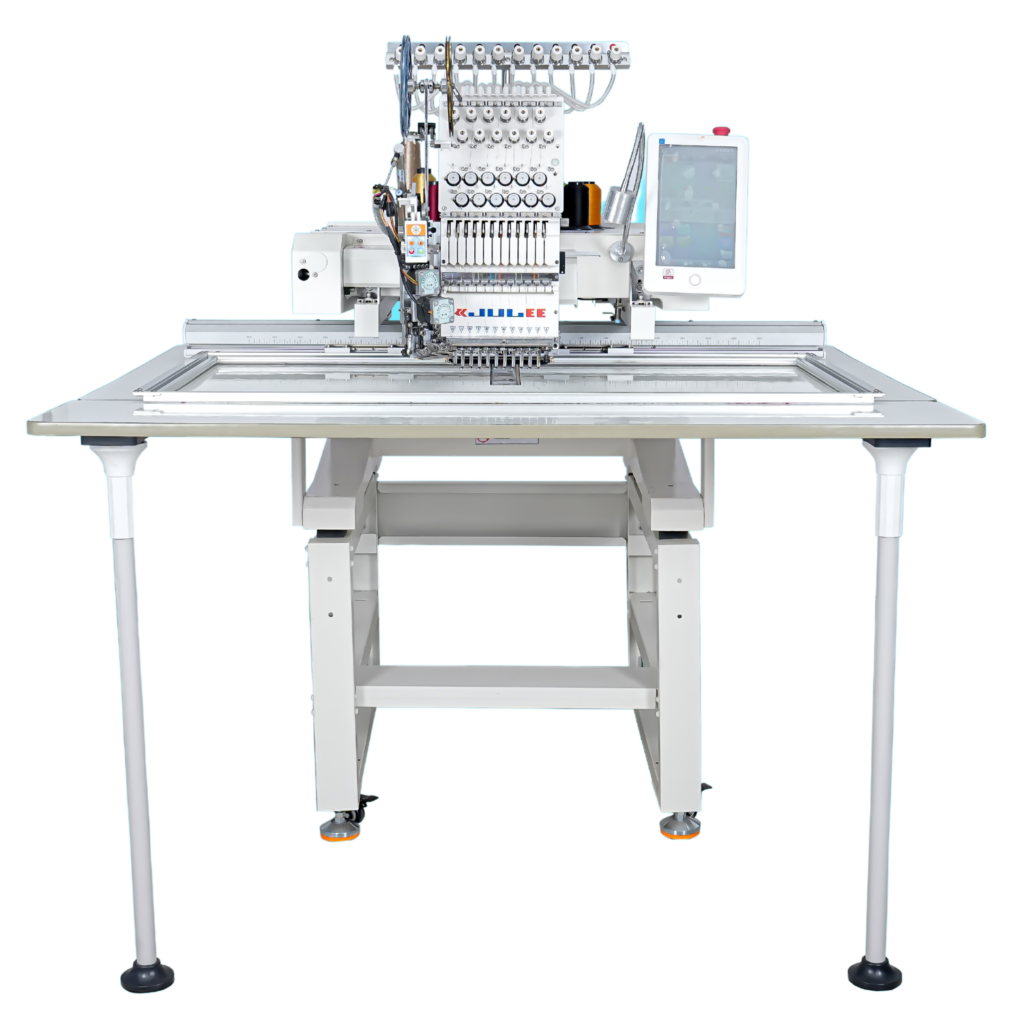
Single Head Embroidery Machine

Best for:

  • Beginners
  • Home businesses
  • Small-scale production

These machines are affordable, easy to use, and ideal for customized work.

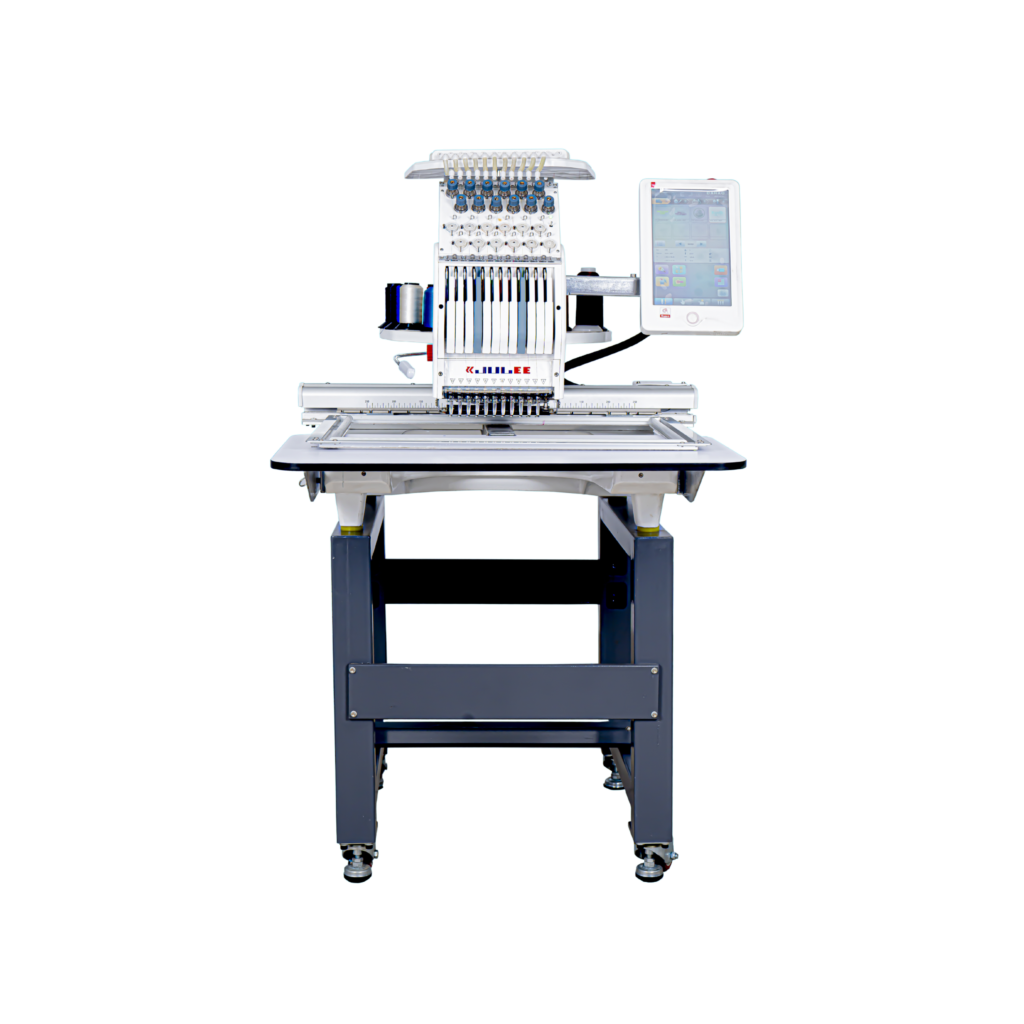
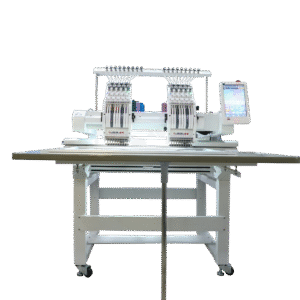
Multi Head Embroidery Machine

Best for:

  • Bulk orders
  • Garment factories
  • Large-scale businesses

They increase production speed and efficiency.

Reliable machines like Julee embroidery machines are widely preferred for their performance, durability, and beginner-friendly operation.

Step 3: Plan Your Budget

One of the biggest advantages of embroidery business is that it can be started with a moderate investment.

Your budget may include:

  • Embroidery machine
  • Threads and accessories
  • Computer/software
  • Workspace setup
  • Marketing expenses

Beginners can even start from home to reduce initial costs.

Step 4: Set Up Your Workspace

You don’t need a large commercial space initially.

A clean and organized workspace with:

  • Proper lighting
  • Stable power supply
  • Ventilation
  • Storage for threads and materials

is enough to start your embroidery business efficiently.

Step 5: Learn Basic Embroidery Skills

Even with modern computerized machines, basic knowledge is important.

Learn:

  • Machine operation
  • Thread handling
  • Design placement
  • Fabric types
  • Basic troubleshooting

Many embroidery machine suppliers, including Julee, provide training and technical guidance for beginners.

Step 6: Create Sample Designs

Before approaching customers, build a small portfolio.

Create samples such as:

  • Logo embroidery
  • Name embroidery
  • Floral patterns
  • Uniform designs

Take high-quality photos of your work for marketing purposes.

Good presentation increases customer trust.

Step 7: Find Your First Customers

Marketing plays a major role in growing your embroidery business.

Start with:

  • Friends and family
  • Local boutiques
  • Tailoring shops
  • Schools and colleges
  • Small businesses

You can also promote your work through:

  • Instagram
  • WhatsApp Business
  • Facebook pages
  • Google Business Profile

Social media is highly effective for embroidery businesses because visuals attract customers quickly.

Step 8: Focus on High-Demand Services

Some embroidery services are always in demand and offer better profit margins.

Popular services include:

  • School uniform logos
  • Company branding
  • Bridal embroidery
  • Kids name embroidery
  • Boutique customization

Customized products usually generate higher profits than standard designs.

Step 9: Improve Quality & Customer Service

Success in embroidery business depends heavily on quality and customer satisfaction.

Focus on:

  • Clean finishing
  • Accurate stitching
  • Timely delivery
  • Professional communication

Happy customers often become repeat clients and recommend your services to others.

Step 10: Scale Your Business

Once you start receiving regular orders, you can expand by:

  • Upgrading to multi-head machines
  • Hiring staff
  • Taking bulk garment orders
  • Offering online services

Investing in high-performance machines helps support long-term business growth.

Profit Potential in Embroidery Business

The embroidery business offers strong profit margins because:

  • Material costs are relatively low
  • Customized work adds premium value
  • Bulk orders increase income significantly

Many embroidery business owners in India earn anywhere between:

  • ₹30,000 to ₹1,00,000+ per month

depending on order volume and service quality.

Common Mistakes to Avoid

Buying the wrong machine
❌ Ignoring customer service
❌ Poor design quality
❌ Lack of marketing
❌ Underpricing your work

Consistency and professionalism are key to long-term success.

✅ Final Thoughts

Starting an embroidery business in India is a smart opportunity for anyone interested in creativity, fashion, and entrepreneurship. With the right machine, proper planning, and consistent effort, you can turn embroidery into a profitable and scalable business.

Whether you start from home or plan a larger setup, success depends on learning continuously, delivering quality work, and building strong customer relationships.

Top Model

Single Head

MId Model

Multi Head

FAQ

1. Is embroidery business profitable in India?

Yes, embroidery business is profitable in India due to the increasing demand for customized clothing, uniforms, boutique designs, and logo embroidery. With the right machine and proper marketing, it can generate steady income.

2. How much investment is needed to start an embroidery business?

The investment depends on the type of embroidery machine and business scale. Beginners can start with a single head embroidery machine and basic setup at a moderate investment.

3. Which embroidery machine is best for beginners?

Single head computerized embroidery machines are best for beginners because they are easy to operate, affordable, and suitable for small-scale production.

4.Is training necessary before starting an embroidery business?

Basic training is highly recommended because it helps you understand machine handling, troubleshooting, and design techniques more efficiently.

Proudly powered by WordPress
IS EMBROIDERY BUSINESS PROFITABLE 2026

Is Embroidery Business Profitable in 2026?

Embroidery Business

The embroidery industry has evolved rapidly, and in 2026 it continues to show strong growth. With rising demand for customized clothing, branding, and personalization, embroidery has become a profitable business opportunity.If you’re planning to start or invest in an embroidery business, this guide will help you understand its profitability, market demand, and growth potential.

Most Important Seven Factors

 One of the biggest reasons for the profitability of the embroidery business is the rising demand for customized products Today,

embroidery is widely used in

As customization becomes a trend, businesses and individuals are actively looking for embroidery services, creating consistent demand throughout the year.

Compared to many other businesses, embroidery requires relatively low investment to get started.

  • A beginner can start with a single head embroidery machine
  • Minimal workspace is required (even from home)
  • Low operational costs

Once you start getting regular orders, the return on investment can be quite fast. Many small business owners recover their initial investment within a few months with consistent work.

Modern computerized embroidery machines have made the process faster, more accurate, and user-friendly.

  • With advanced features like:
  • Automatic thread cutting
  • Multiple needle options
  • Digital design support

Even beginners can produce professional-quality designs without extensive experience.

Machines like JULEE embroidery machines are designed to be beginner-friendly while offering high performance, making it easier to start and scale your business.

One of the biggest advantages of embroidery is that it can be started from home.

This makes it ideal for:

  • Housewives
  • Students
  • Part-time entrepreneurs
  • Small boutique owners

With minimal setup and flexible working hours, you can start small and gradually expand your business based on demand.

The profit margin in embroidery is generally high because:

  • Cost of raw materials (thread, fabric) is low
  • Customization adds premium value
  • Bulk orders increase profit significantly

For example:

A simple logo embroidery may cost very little to produce but can be sold at a much higher price

Bulk uniform orders generate steady income

With proper marketing and consistent orders, earning ₹30,000 to ₹1,00,000 per month is achievable.

The embroidery business offers excellent scalability.

You can start with:

  • A single head machine

And expand to:

  • Multi-head machines
  • Bulk production
  • Multiple clients (boutiques, companies, schools)

Investing in reliable machines like Julee allows you to scale smoothly without frequent upgrades or issues.

Like any business, embroidery also has some challenges:

  • Initial learning curve
  • Finding customers in the beginning
  • Maintaining consistent quality
  • Machine maintenance

However, with proper training, the right machine, and a good marketing strategy, these challenges can be easily managed.

To make your embroidery business more profitable:

  • Focus on high-demand products (uniforms, logos, bridal wear)
  • Build strong local connections (boutiques, schools)
  • Use social media platforms like Instagram & WhatsApp
  • Deliver quality work on time
  • Offer customization options

 Consistency and customer satisfaction are key to long-term success.

So, is the embroidery business profitable in 2026?

Yes — absolutely.

With growing demand, low start-up costs, and high customization value, embroidery remains one of the most profitable small business opportunities today.

Whether you are starting from home or planning a large-scale operation, the right approach and the right equipment can help you build a successful and sustainable business.

we are SS Creations, based in the textile hub of Tirupur, Tamil Nadu, and the proud creators of the signature brand JULEE. What began in 2004 as a humble sole-proprietorship has blossomed into a trusted name in the embroidery-machine indust

Embroidery considered better than screen printing for logos?

Embroidery offers a professional image and a high perceived value. It is also far more durable and wash-resistant, ensuring the logo doesn’t peel or fade over time.

Is it possible to run a home-based business with these machines?

Absolutely. Many entrepreneurs start small-scale embroidery businesses from home, focusing on personalized gifts and local boutique orders before scaling up to larger industrial setups.

blog img 2r

Best Embroidery Machine for Beginners

Starting your journey in embroidery can be both exciting and overwhelming. With so many machines available in the market, choosing the right one as a beginner can feel confusing. The right embroidery machine not only makes your learning process easier but also helps you build a profitable business over time.This complete guide will help you understand everything you need to know before choosing the best embroidery machine for beginners.

For beginners, selecting the right embroidery machine is crucial. A complex machine with advanced settings may slow down your learning, while a simple and user-friendly machine can help you gain confidence quickly.The right machine will:

Many beginners today prefer starting with Julee embroidery machines because they are designed with simplicity, reliability, and beginner-friendly features in mind.

Before buying, it’s important to understand the basic types of machines available:

1. Single Head Embroidery Machine

This is the best option for beginners. It is easy to operate, affordable, and perfect for small-scale work such as names, logos, and custom designs.

Julee Single Head Machines are widely used by beginners and small business owners for their smooth performance and easy operation.

2. Multi Head Embroidery Machine

These machines are designed for bulk production. They are more suitable for advanced users or businesses handling large orders.

Key Features

When choosing a beginner-friendly embroidery machine, focus on these essential features:

User-Friendly Interface

A simple control panel or touch screen makes it easier to operate the machine without confusion.
Julee machines come with easy-to-use controls, making them ideal for first-time users.

Built-in Designs & USB Support

Machines with pre-loaded designs and USB options allow you to experiment and create custom patterns easily.
With Julee machines, you can easily import your own designs and start customizing products.

Automatic Functions

Features like automatic thread cutting and color changing save time and reduce manual effort.
Julee machines include smart automation features that simplify embroidery work.

Number of Needles

Machines with multiple needles allow faster color changes and improve efficiency.
Julee offers multi-needle options to enhance speed and productivity.

Many beginners make these mistakes:

  • Buying a machine without proper research

  • Choosing based only on low price

  • Ignoring service support

  • Selecting complex machines

Avoiding these mistakes can save time, money, and effort.

The best embroidery machine for beginners is one that is:

  • Easy to use
  • Reliable
  • Feature-rich
  • Supported by strong customer service

Starting with the right machine helps you build skills and gradually expand your business.

Embroidery is a skill that can easily turn into a profitable business when combined with the right tools. As a beginner, your focus should be on learning, practicing, and gradually improving your work.

Choosing the right embroidery machine is the first and most important step in this journey. Take your time, compare options, and invest in a machine that supports your growth.

Proudly powered by WordPress