What Is the Best Computerized Embroidery Machine in 2025? - My honest review

What Is the Best Computerized Embroidery Machine in 2025? – My honest review

A New India, A New Kind of Woman Entrepreneur

I am 25 years old living in Tirupur, South India and my first understanding of this hard work did not come from a book. Isn’t it? so it came from watching many women across my region and my neighbours bend over sewing machines late at night.  My close aunties carefully finished blouse borders and returned small rooms into quiet workshops where they stitched thread by thread. They never called themselves entrepreneurship instead, it was simply responsibility, survival and hope. 

But something has changed.

In India, today is moving forward with confidence, and so are its women. In 2025 embroidery is no longer seen as just a traditional skill passed from one generation to another. It has become a serious business opportunity and source of financial Independence, the door way to self-respect. So what once stayed hidden inside homes is now stepping into the light as the professions with pride.

Across the South Indian’s major cities, Women are courageously choosing to begin again. Some start from a single room in their homes, some open small workshops, some build boutique brands with their own names stitched into every piece. There is a quiet revolution happening that one where women choose machines is not just a work, but it stands on their own feet.

The demand is real and growing, customized clothing, bridal embroidery, uniforms, ethnic wear and designer pieces are no longer limited to big cities. Customers want personal stories behind their garments. They want craftsmanship. They want authenticity. and women are ready to deliver.

Yet, with this new freedom comes a very personal question – one that carries both excitement and fear:

“What is the best computerised embroidery machine in 2025 for someone like me?”

Someone who dreams big but starts small.

Someone who wants stability, not risk.

Someone who believes in growing step by step.

The question is not only about technology it is about trust, confidence, and choosing the right beginning. Because for many women in my region today, an embroidery machine is not just a purchase, it is a first step towards their independence, their dignity, and future they can finally call their own. 

In 2025, the first and foremost comes into my mind is “Julee” from SS CREATIONS Tirupur. I felt the story of SS Creations has introduced the signature brand where the reverse arrow is called for roots of embroidery. 

Lets Explore Julee - The real computerized embroidery heroes:

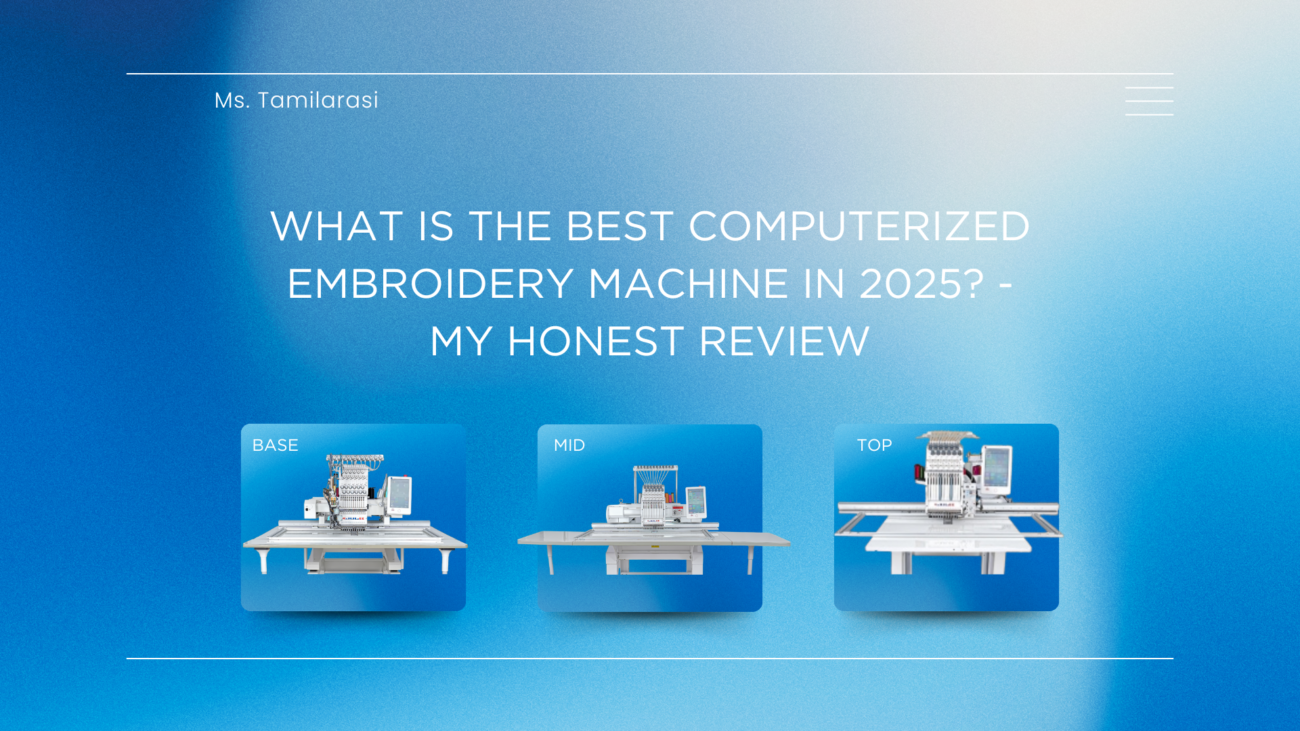
The Julee brand is committed to delivering reliable, efficient, and scalable embroidery solutions for modern businesses across the region. SS Creations has a wide range of Julee machines starting from single head embroidery machines – base, mid, and top model with unique features to completely customized upto 42 heads for big commerce trade. 

With all the above, I loved the special model for my journey: Single Head computerized embroidery machine MID JL MY2040 – frame size 500*1000mm because it aligned perfectly with the stage of my entrepreneurial journey.
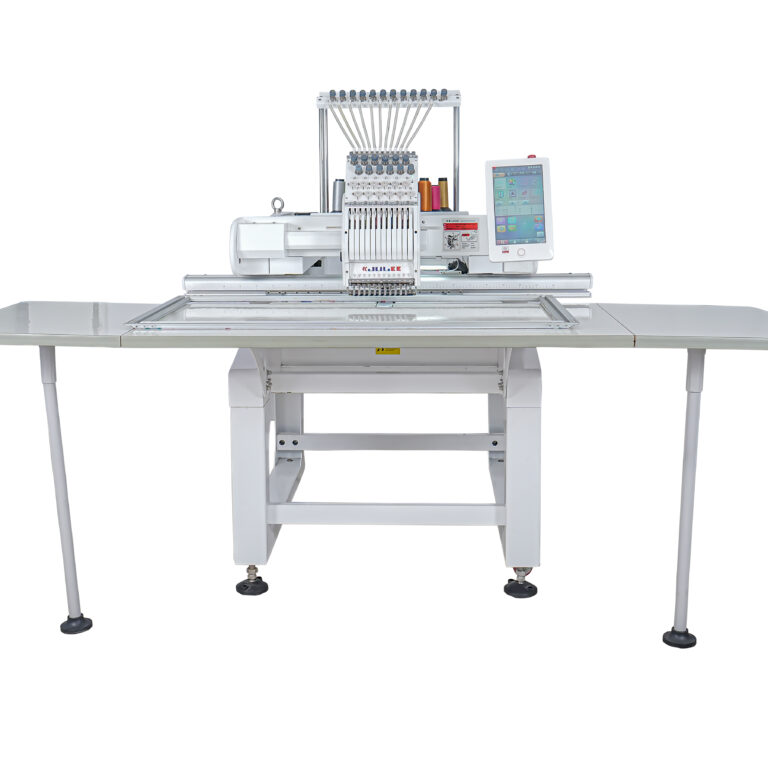
single head embroidery machine - mid model - julee embroidery
Photo Credit: Julee MY2040

So at this point in my business, I need more than a beginner level machine because my existing orders were increasing, designs were becoming more detailed, and customers expected consistency and quality. The mid level offered me exactly the balance and professional capacity without unnecessary complexity.

The right frame size for the real business Growth

The 500*1000mm frame size was the decisive factor for me. It provides enough working area to handle large embroidery designs such as saree pallus, dupattas, kurti panels, uniforms logos, and boutique orders without constant repositioning. This not only improves efficiency, but also maintains design accuracy for someone growing step by step. The frame size allows flexibility. So the small customized jobs on one day and large commercial orders on another day. so it supports growth without forcing and immediate shift to an industrial scale setup. 

Performance That Matches My Daily Workflow

The Single Head MID JL MY2040 delivers stable performance throughout long working hours, which is essential when managing deadlines and multiple client expectations. Its smooth operation, precise stitching, and consistent output help maintain professional standards—something that matters deeply when building a brand reputation.

As a woman entrepreneur, reliability is not optional. I needed a machine that works as hard as I do, without frequent interruptions or technical uncertainty. This machine provides that confidence.

Conclusion: A Machine That Grows With Me

For my journey in 2025, the MID JL MY2040 – 500 × 1000 mm frame size is not just equipment. It is a partner in progress. It represents a thoughtful investment—one that values consistency, creativity, and confidence. 

As my business continues to grow, this machine stands as proof that choosing the right technology at the right time can transform effort into excellence—and ambition into achievement.

In 2025, embroidery is not just work.

It is confidence, courage, and a future built with our own hands.

Article by: Ms.Tamilarasi.

How to Integrate Embroidery Machines with E-Commerce Platforms (Shopify, Etsy, Amazon)

The embroidery business is no longer limited to local boutiques and walk-in customers. Today, more and more embroidery entrepreneurs are moving online, offering customized apparel, uniforms, and accessories through e-commerce platforms like Shopify, Etsy, and Amazon. With the right setup, your embroidery machines can be directly integrated into your online store, making order management smooth, reducing errors, and speeding up production.

In this guide, we’ll explore the step-by-step process of integrating embroidery machines with e-commerce platforms, the benefits of doing so, and the best tools and practices to ensure your embroidery business thrives online.

Why Integration Matters

Running an embroidery business without integration often means juggling orders from multiple platforms, manually re-entering customer details, and constantly switching between order management and production. This slows down workflow and increases mistakes.

When embroidery machines and e-commerce stores work together, you unlock:

  • Automation: Orders flow directly into your production queue.
  • Speed: No more delays between customer purchase and embroidery setup.
  • Accuracy: Reduce human error in digitizing and file transfers.
  • Scalability: Handle 10 orders or 1,000 with the same process.

Step-by-Step Integration Process

1. Choose the Right Platform

Not every platform is right for every embroidery business:

  • Shopify: Ideal for building your own branded store, complete with custom design options for customers.
  • Etsy: Best for embroidery shops targeting handmade, craft, or personalized product buyers.
  • Amazon: Perfect for large-scale embroidery businesses aiming for mass exposure and bulk sales.

2. Connect Your Store to Your Workflow

Most platforms allow integration through apps, plugins, or APIs. For example:

  • Shopify apps like Order Desk or Automizely can route orders into your production system.
  • Etsy offers integration via middleware that connects directly with embroidery management software.
  • Amazon sellers often use third-party ERP or MIS tools to handle bulk orders.

3. Sync with Embroidery Software

Once orders arrive in your system, you’ll need to link them to embroidery software such as Wilcom, Hatch, Pulse, or Tajima DG. These programs allow you to:

  • Convert order details (names, logos, designs) into stitch-ready files.
  • Automate design placement on specific product templates (caps, shirts, bags).
  • Save time with pre-digitized design libraries for repeat orders.

4. Send Jobs to Embroidery Machines

Most industrial embroidery machines accept file formats like DST, PES, EXP, JEF, or VP3. With integration, your digitized files can be automatically assigned to machines, either directly or through a production manager.

  • For multi-head machines, orders can be grouped for bulk production.
  • For custom, one-off orders, files can be queued individually.

Tools & Software to Make It Easier

Here are some tools that embroidery businesses use to bridge e-commerce and production:

  • Shopify Apps: Order Printer Pro, InkSoft, Printful alternatives (with embroidery support).
  • Embroidery-Specific ERPs: DecoNetwork, Hoopmade, EmbroideryWorks.
  • Digitizing Services: Cloud-based services that convert artwork into embroidery files and sync back to your workflow.
  • Automation Tools: Zapier or Integromat (Make) to connect e-commerce platforms with embroidery software.

Challenges & How to Solve Them

  1. Handling Personalization
    • Problem: Customers want unique names, initials, or logos.
    • Solution: Use product pages with text/image upload options that feed directly into your embroidery software.
  2. File Format Compatibility
    • Problem: Different embroidery machines require different file formats.
    • Solution: Set up your digitizing software to auto-export into multiple formats if needed.
  3. Bulk vs. Custom Orders
    • Problem: One-off personalized orders take more time than bulk runs.
    • Solution: Separate workflows—use batching for large runs and automation for small, custom jobs.
  4. Integration Costs
    • Problem: Some apps and ERPs can be expensive.
    • Solution: Start with affordable tools (like Order Desk or Zapier) before scaling into enterprise-level systems.

Best Practices for Success

  • Offer Customization at Checkout: Add fields for names, logos, or fonts directly on your e-commerce store.
  • Maintain a Design Library: Store frequently used digitized designs for faster turnaround.
  • Train Your Team: Staff should know how to handle order syncing, file checking, and machine setup.
  • Test with Small Batches: Before rolling out integration to your whole business, test it with a few products.
  • Keep Communication Open: Send automated order status updates to customers for better trust.

Case Study Example

Imagine a small embroidery shop in Delhi selling personalized T-shirts. Initially, all orders came through WhatsApp and had to be entered manually into a logbook. Customers often faced delays, and mistakes in name spellings were common.

After setting up a Shopify store with an embroidery integration app, orders flowed directly into their digitizing software. Designs were auto-processed and sent to their 4-head embroidery machine. Turnaround time dropped from 5 days to 2 days, and sales doubled within 6 months.

The Future of Embroidery + E-Commerce

Looking ahead, AI will play a massive role in embroidery integration. AI-powered digitizing can instantly convert customer-uploaded logos into stitch-ready files. Machine learning will help predict which designs sell best, while cloud-based systems will allow embroidery businesses to operate entirely online.