The Ultimate Guide to Single Head Automatic 12 Needle Embroidery Machine Price in Coimbatore: Dealers, Models, and Buying Tips

The Ultimate Guide to Single Head Automatic 12 Needle Embroidery Machine Price in Coimbatore: Dealers, Models, and Buying Tips

If you are currently searching for a single head automatic 12 needle embroidery machine price in Coimbatore, you are likely on the verge of making a significant decision for your business. Whether you are upgrading a home-based setup, expanding a fashion boutique, or managing a garment shop, finding the right machinery is crucial to your success.

Coimbatore is renowned as one of South India’s most dynamic textile hubs. However, navigating the market for industrial-grade embroidery machines can be overwhelming. You may be faced with generic listings, confusing import specifications, or uncertainty regarding after-sales support.

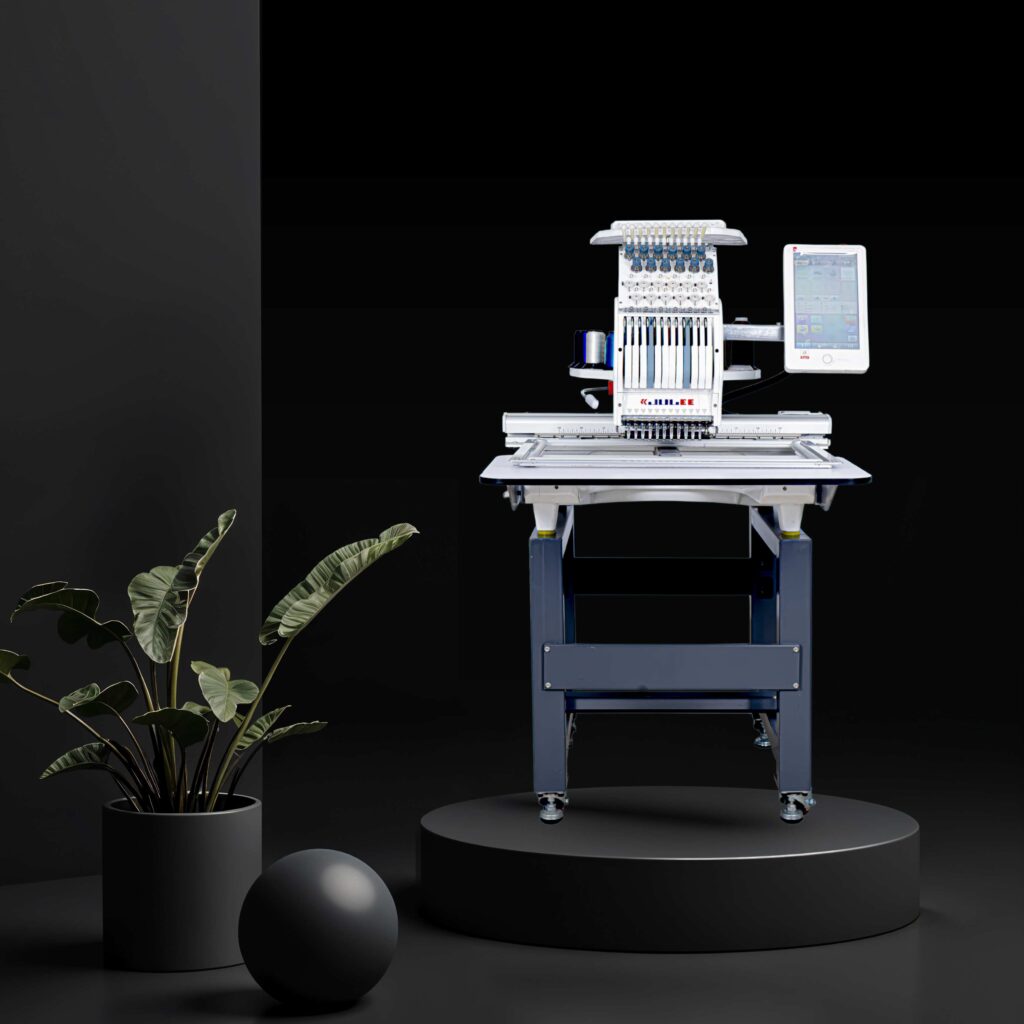
This comprehensive guide is designed specifically for you. It covers everything from pricing and technical specifications to local dealer details. Our goal is to provide you with a clear roadmap so you can invest with confidence, knowing you have the support of trusted local manufacturers like Julee (SS Creations) in nearby Tiruppur.

Table of Content: 

  1. Why Coimbatore Buyers Look to Tiruppur for Embroidery Solutions
  2. Who is Julee (SS Creations)?
  3. What Is a Single Head Automatic 12 Needle Embroidery Machine?
  4. Julee’s Top Models for Coimbatore Buyers
  5. Pricing Guide: Single Head Automatic 12 Needle Embroidery Machine in Coimbatore
  6. Applications: What Can You Create?
  7. Buying Guide: How to Choose the Right Machine for You
  8. Suitability by User Profile
  9. Maintenance: Protecting Your Investment
  10. Frequently Asked Questions (FAQ)
  11. Conclusion


1. Why Coimbatore Buyers Look to Tiruppur for Embroidery Solutions

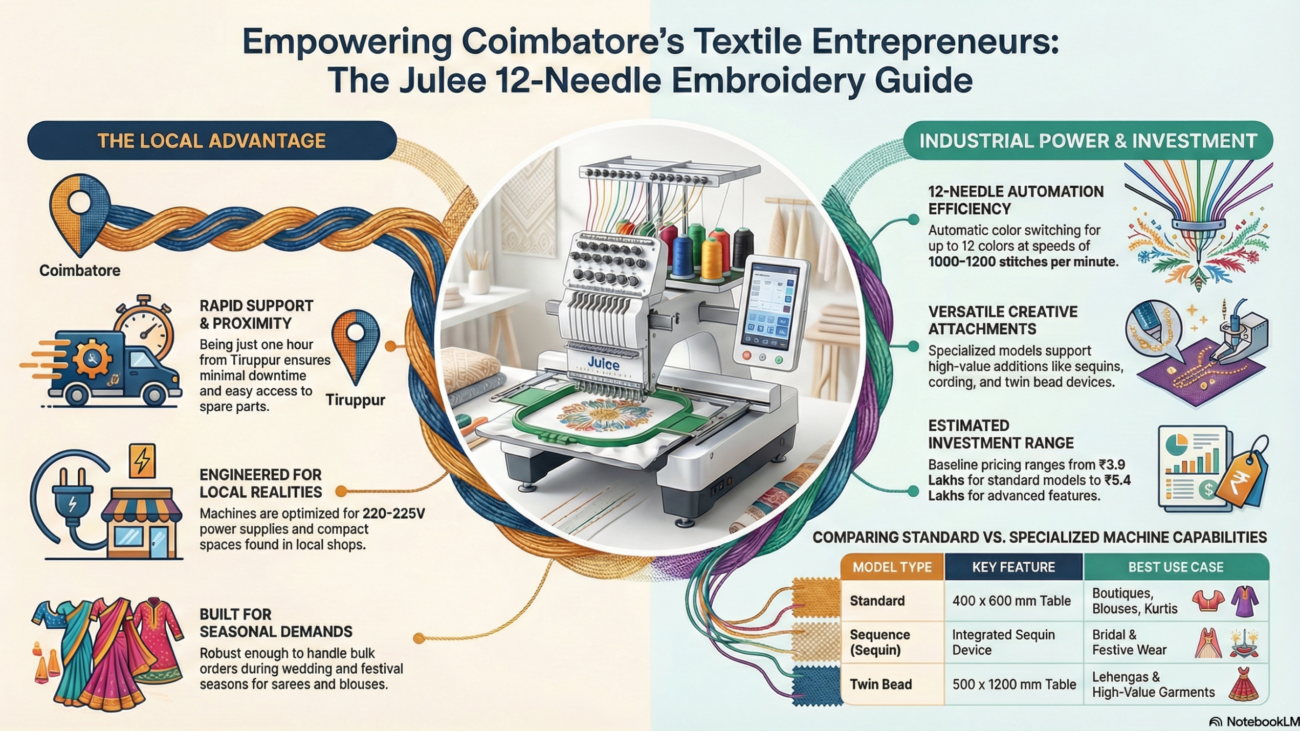
When looking for embroidery machines, many business owners in Coimbatore naturally turn their attention to Tiruppur. Located just an hour away by road, Tiruppur is not just a textile manufacturing hub; it has evolved into a sophisticated base for manufacturing the machines themselves.

1.1 The Advantage of Local Proximity

For a buyer in Coimbatore, relying on imported brands often means dealing with slow service responses and difficult access to spare parts. In contrast, sourcing from a manufacturer in Tiruppur, such as Julee (SS Creations), offers distinct advantages:

  • Understanding Local Needs: Manufacturers in this region understand the specific day-to-day realities of your business.
  • Rapid Support: You receive industrial-grade machinery backed by service teams that are geographically close, ensuring that downtime is minimised.

Tailored Solutions: Local suppliers understand the fabric types, workflows, and budget constraints typical of the Coimbatore market.

1.2 Addressing Coimbatore’s Business Challenges

Local manufacturers have designed their machines to solve specific problems faced by entrepreneurs in Coimbatore:

  • Seasonal Demands: Machines are built to handle sudden peaks during wedding and festival seasons, perfect for blouse and saree work.
  • Bulk Orders: They are robust enough to manage sudden bulk orders for uniforms, jerseys, and corporate wear.
  • Space Constraints: The single-head design is specifically engineered for limited spaces found in small shops or home setups.
  • Power Reliability: Recognising local infrastructure, these machines are optimised for 220–225 V power supplies, handling fluctuations better than some sensitive imports.

2. Who is Julee (SS Creations)?

To understand the market for embroidery machines in Coimbatore, it is essential to know the key players. Julee is the flagship brand of SS Creations, a company established in 2004 in Tiruppur, Tamil Nadu.

2.1 A Legacy of Manufacturing

SS Creations is not merely a reseller; they manufacture and export a wide range of embroidery machinery. Their portfolio includes:

  • Single head computerized embroidery machines.
  • High-speed industrial models.
  • Specialised machines featuring cording, twin sequins, and bead devices.
  • Machines with extended work areas (up to 500 x 1200 mm).  

2.2 Market Positioning

Julee’s positioning is strategic. They offer feature-rich, robust machines that match or exceed the capabilities of imported brands. However, they maintain pricing at a realistic level for Indian entrepreneurs. This approach has made them a primary destination for Coimbatore searches, as they provide a balance of quality and affordability that is hard to find elsewhere.

3. What Is a Single Head Automatic 12 Needle Embroidery Machine?

If you are new to industrial embroidery, you might be asking: “Where to buy a single head embroidery machine for home use?” or “What exactly does this machine do?”.

3.1 Understanding the "Single Head" Concept

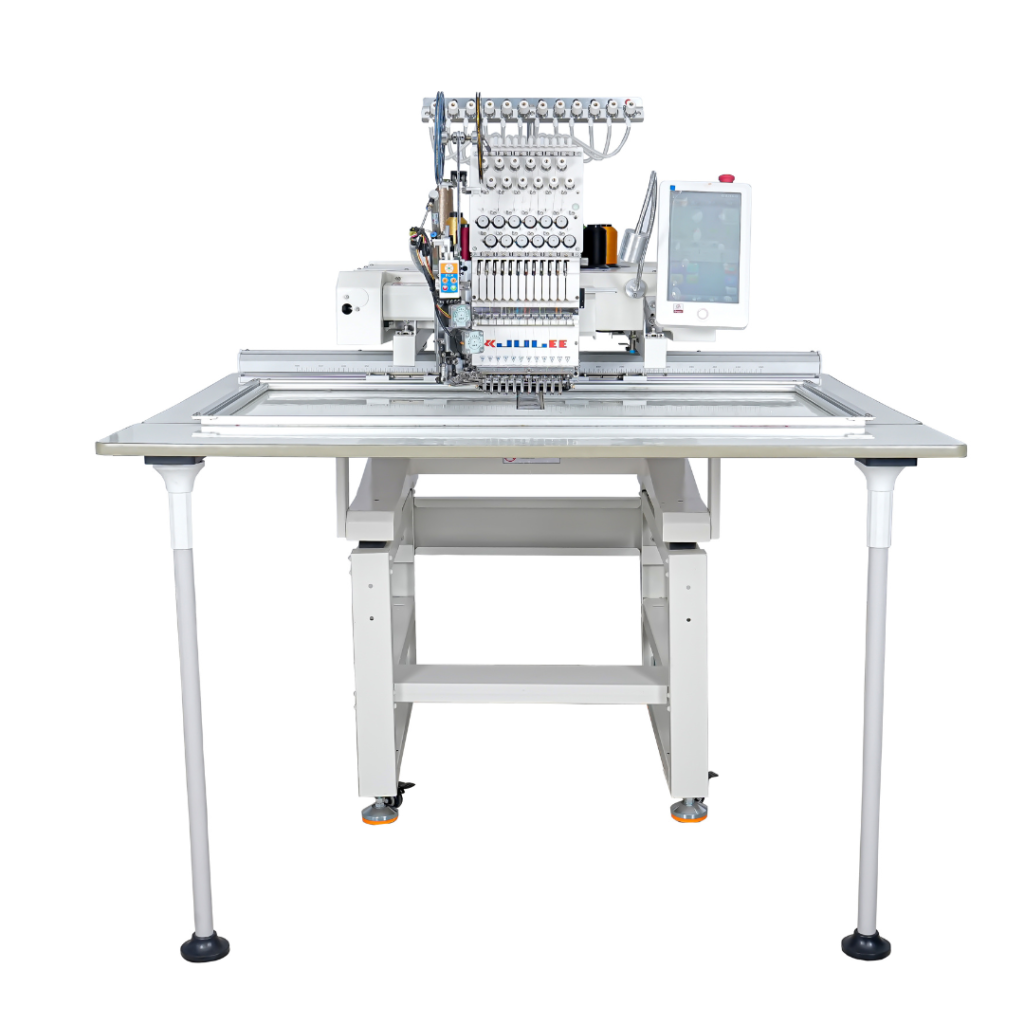
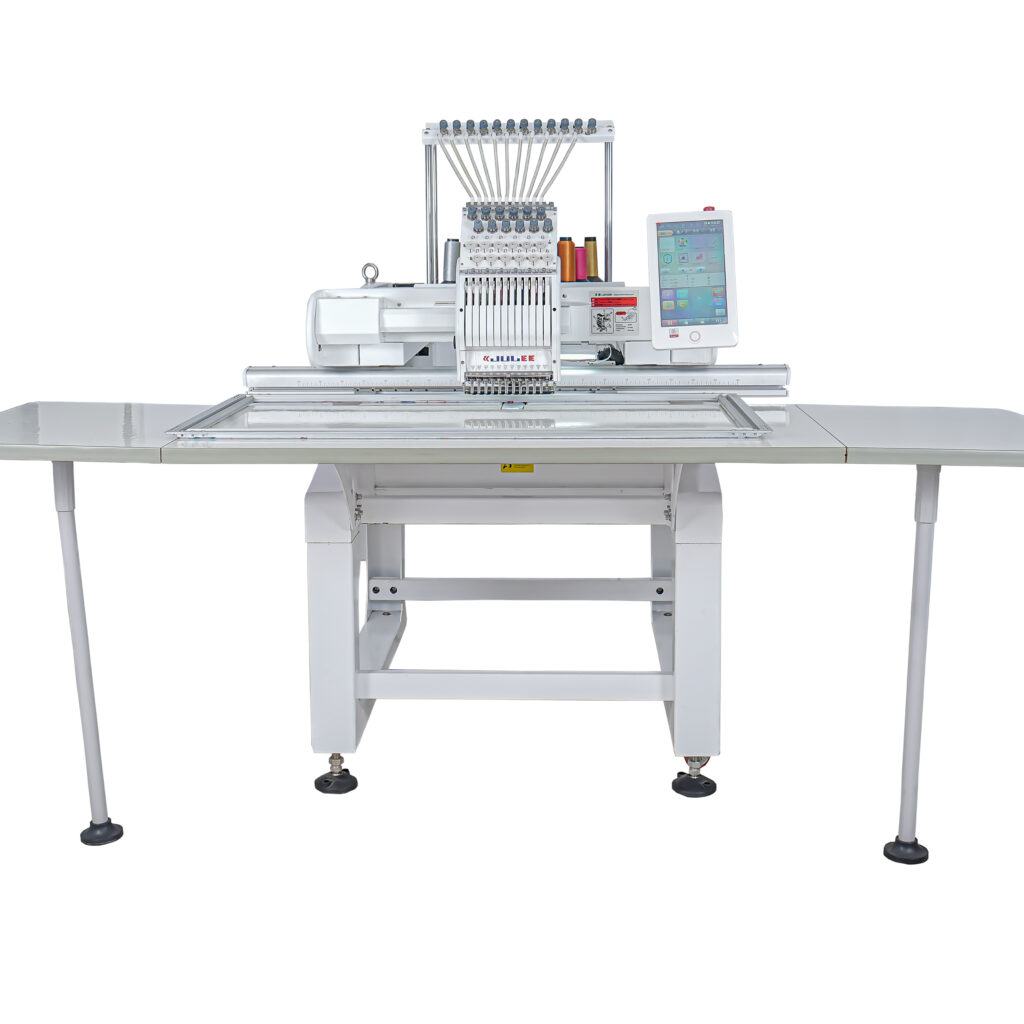
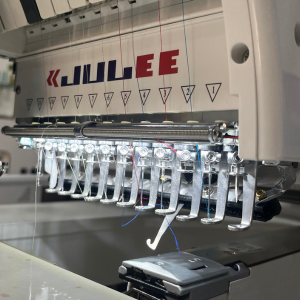
A single-head embroidery machine features one main embroidery head. Unlike massive multi-head factory machines that take up entire floors, a single-head machine is compact. This makes it the perfect answer for boutiques and home studios that require industrial quality without the industrial footprint.

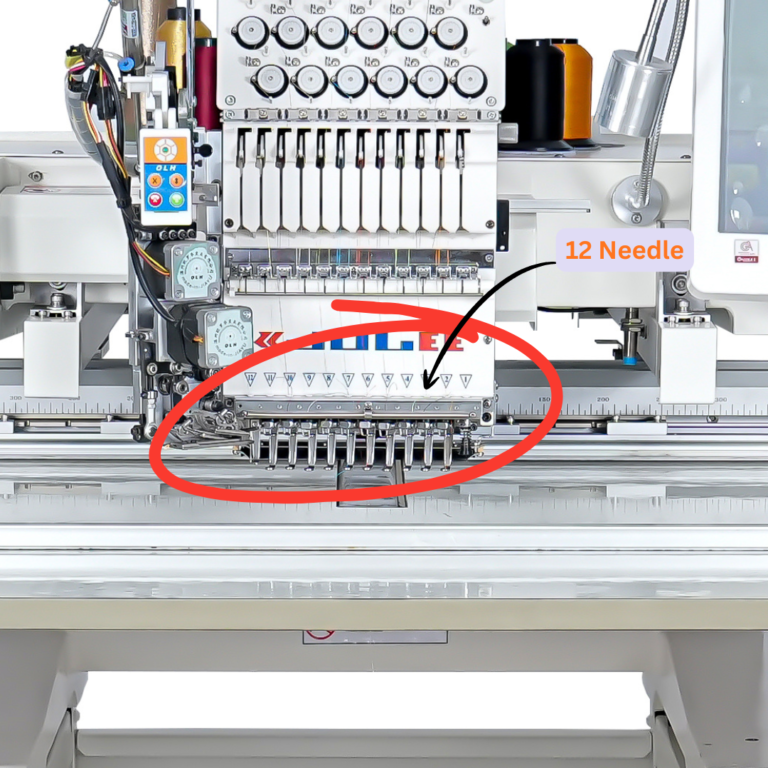
3.2 The Power of 12 Needles

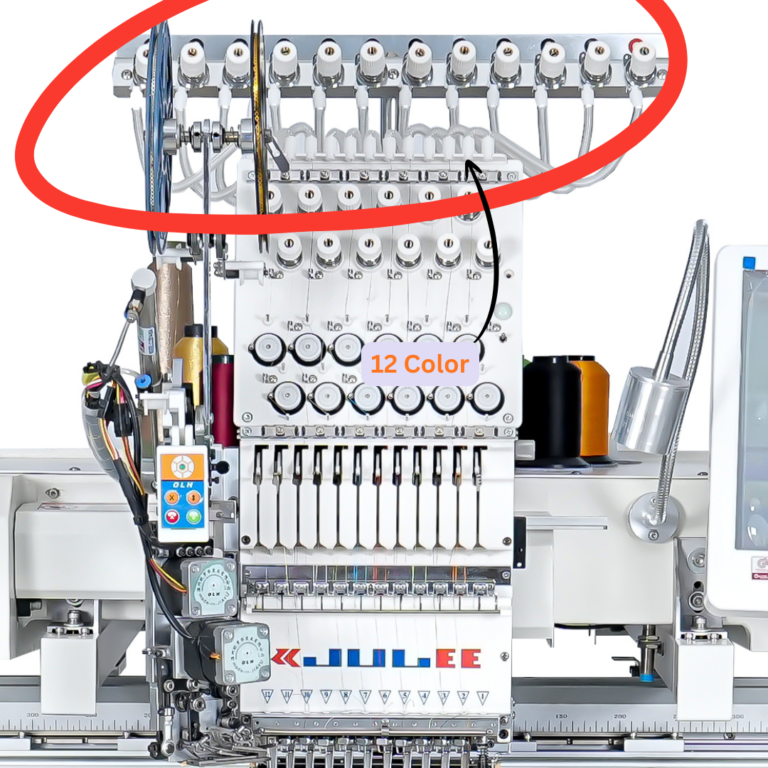
The “12 needle” configuration is a game-changer for creativity and efficiency.

  • Colour Flexibility: The head holds 12 different thread colours simultaneously.
  • Automation: The machine automatically changes colours while running a design. You do not need to manually rethread the machine between different segments of a logo or pattern.

Design Depth: This allows for intricate borders, gradients, and multi-coloured logos that look professional and high-end.

3.3 Key Technical Traits

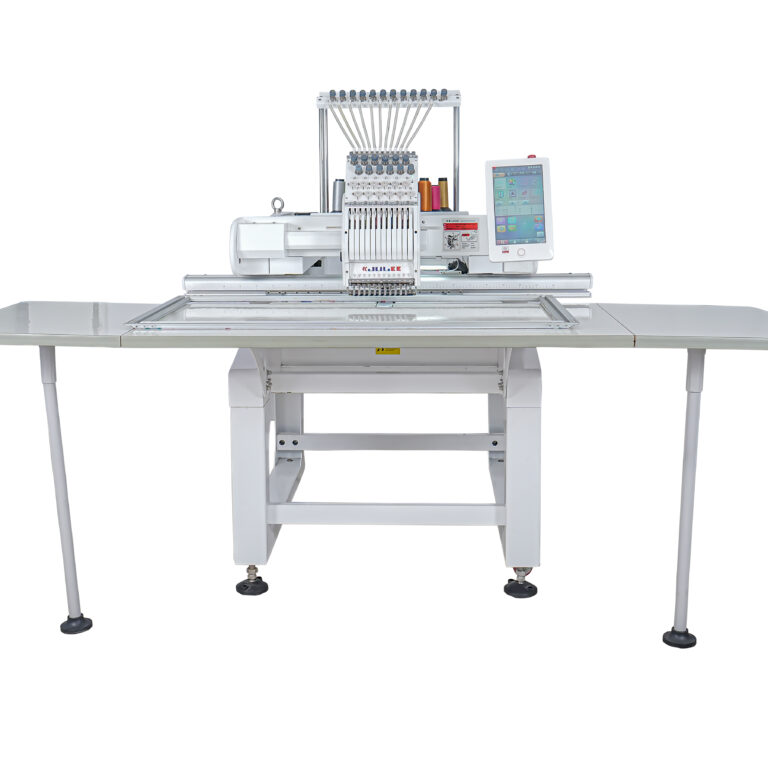
Julee’s 12-needle automatic single-head machines are defined by several high-performance specifications:

  • Sturdy Build: Constructed with cast-iron or mild steel frames for maximum stability and reduced vibration.
  • Speed: Capable of speeds up to 1000–1200 stitches per minute (SPM), depending on the specific model.
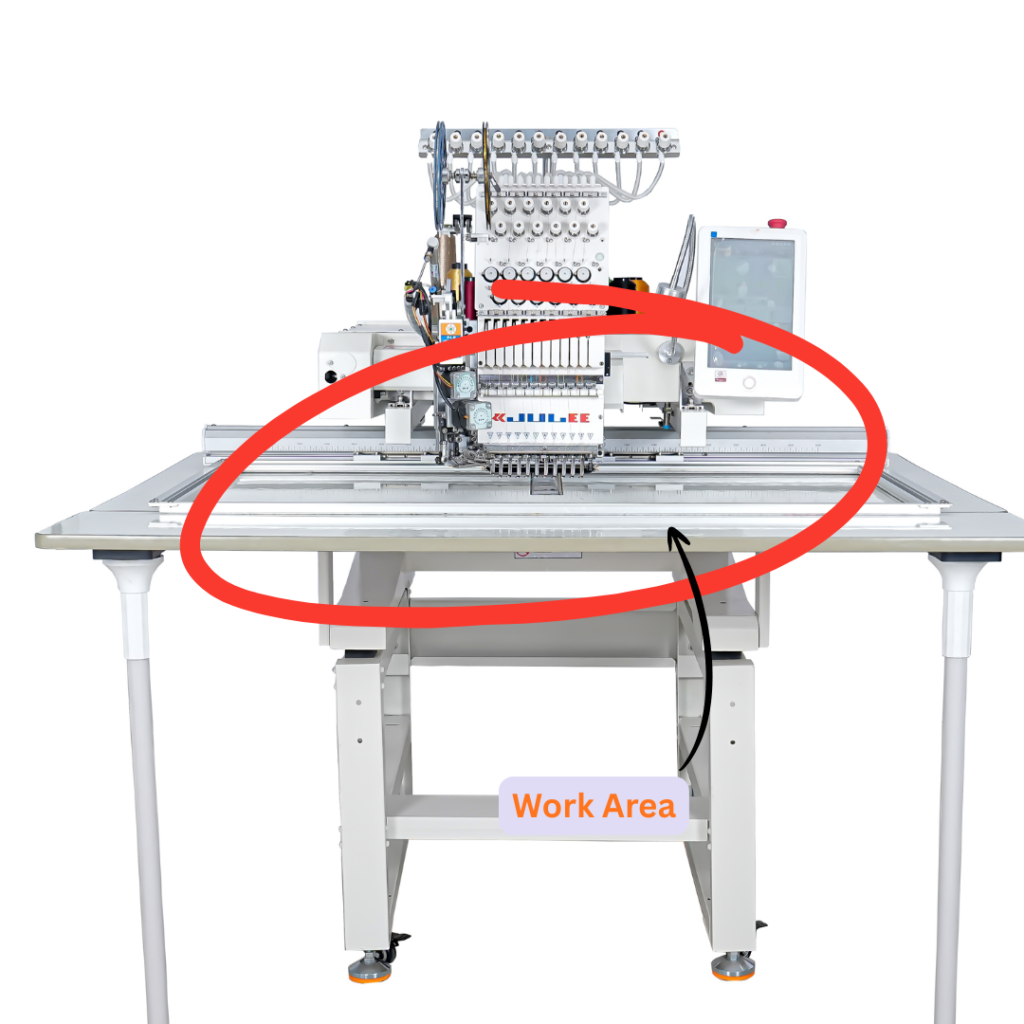
  • Work Area: Common sizes include 500 x 1000 mm or 500 x 1200 mm, accommodating large garments like sarees.
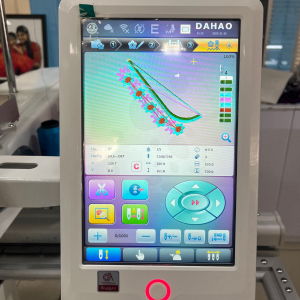
  • User Interface: Equipped with 10-inch touchscreen LCD panels featuring user-friendly menus for easy operation.

Voltage: Operates on standard 220–225 V, making it suitable for typical Indian electrical setups

4. Julee’s Top Models for Coimbatore Buyers

When you browse Julee’s product range, you will encounter several variants. Understanding the differences between these models will help you choose the right one for your specific needs.

4.1 Computerized Automatic Single Head Embroidery Machine (Standard)

This is the core industrial model, often the entry point for serious businesses.

  • Worktable Size: 400 x 600 mm.
  • Speed: 1000 SPM for flat stitches.
  • Material: Cast-iron construction for durability.
  • Best For: Boutiques designing blouses and kurtis, or shops handling mid-volume t-shirt and uniform orders. It strikes a perfect balance between size, speed, and price for the average Coimbatore user.

4.2 JL2040 + Sequence (Sequin Model)

For businesses focusing on bridal and festive wear, this model adds a layer of glamour.

  • Special Feature: Integrated sequence (sequin) device for additional decoration.
  • Speed: Up to 1200 stitches per minute on many flat jobs.
  • Control: 10″ touchscreen with design preview capabilities.
  • Best For: High-end boutiques requiring sequins for wedding blouses and heavy sarees. Visit here

4.3 JL-TM2048B+B (Twin Bead Device Model)

This model is designed for premium embellishment.

  • Worktable Size: Extended area of 500 x 1200 mm.
  • Special Feature: Bead device capability.
  • Power: 1 HP consumption.

Best For: Long borders, lehengas, and high-value garments where beadwork commands a higher price. Visit here

4.4 JL-MY2040 (Large Area Model)

If your work involves home furnishings or large fabric panels, this machine offers the necessary space.

  • Worktable Size: 500 x 1000 mm.
  • Capacity: Approximately 45,000 stitches per hour.

Best For: Home furnishing creations and large garment panels. Visit here

4.5 JL-TM1624 (Cording and Twin Sequins)

This is the ultimate creative station for designers.

  • Special Features: Easy cording and twin sequin capabilities.
  • Speed: Max speed of 1200 SPM.

Best For: Designer studios where ornate detailing and unique textures are the core business offering. Visit here

5. Pricing Guide: Single Head Automatic 12 Needle Embroidery Machine in Coimbatore

One of the most common queries is regarding the single head automatic 12 needle embroidery machine price. While prices fluctuate based on market conditions and taxes, we can provide a realistic ballpark based on Julee’s listings.

5.1 Estimated Price Range

For a Coimbatore customer buying from Julee/SS Creations:

  • Base Models: Standard single-head machines (often including cording capabilities) are typically priced around ₹3,90,000.

Advanced Models: Machines equipped with multi-function features like sequins or beads are generally listed around ₹5,40,000

5.2 Factors Influencing Price

  • Factory Direct: The price you pay is typically similar to the factory price in Tiruppur (₹4.2–4.9 lakh range).
  • Add-ons: Accessories such as cap frames, specialized beading devices, twin sequins, or laser cutting attachments will increase the total cost.
  • Logistics: Delivery involves a modest transport charge from Tiruppur to Coimbatore, which is usually a minor part of the total investment.
  • Taxes: GST is applicable at current rates on machinery.

Note: For the most accurate and current pricing, it is highly recommended to contact Julee directly for a quotation. The ₹4–5 lakh range is a solid baseline for your budget planning.

6. Applications: What Can You Create?

Investing in a Julee machine opens up a vast array of creative possibilities. The versatility of a 12-needle single-head machine allows you to shift between different market segments without needing multiple machines.

6.1 Traditional Apparel

Coimbatore is famous for its ethnic wear. These machines are perfect for:

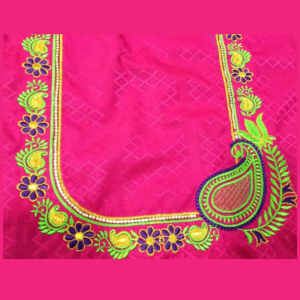
  • Blouses and Sarees: Create intricate borders and motifs using cording and sequins.
  • Kids’ Ethnic Wear: Produce colourful, detailed designs for festive occasions.
  • Sherwanis: Handle heavy fabrics and elaborate patterns.

6.2 Western Garments and Uniforms

For the corporate and casual market, these machines offer high-speed efficiency:

  • Branding: Embroider logos on t-shirts, hoodies, and denim jackets.
  • Monograms: Personalise shirts and accessories for premium clients.

6.3 Accessories and Home Décor

Expand your product line with:

  • Small Items: Caps, socks, sleeves, and tote bags (using appropriate frames).

Home Furnishings: Cushion covers, table runners, curtains, and wall hangings, especially using the larger work area models.

7. Buying Guide: How to Choose the Right Machine for You

To ensure you make the best investment, follow this step-by-step buying guide tailored for the Coimbatore market.

Step 1: Define Your Use Case

Be clear about your business model.

  • Home User: Do you need a machine that fits in a spare room?
  • Boutique: Are you focusing on high-margin bridal wear?

Shop: Are you targeting high-volume uniform orders?

Step 2: Decide on Work Area

Choose a worktable size that fits your primary product.

  • 400 x 600 mm: Sufficient for most apparel, t-shirts, and logos.

500 x 1000 mm / 500 x 1200 mm : Essential for long borders, saree pallus, or home furnishing panels.

Step 3: Select Attachments

While 12 needles are standard, the attachments define your niche.

  • Cording Devices: Ideal for textured outlines and calligraphy.
  • Twin Sequin Units: Necessary for sparkling bridal and party wear.
  • Bead Attachments: For premium, high-value embellishments.

Tip: If you are just doing basic logos, a simpler machine is cost-effective. If you run a boutique, cording and sequins are worth the extra cost.

Step 4: Verify Technical Specs

Ensure the machine meets industrial standards.

  • Speed: Look for 1000–1200 SPM for productivity.
  • Build: Confirm cast iron or mild steel frames for stability.

Power: Ensure it runs on 220–225 V and has ISI certification.

Step 5: Plan Your Budget

Use the ₹4.20 lakh to ₹4.90 lakh range as a guide.

  • Financing: Ask about financing options from local banks.
  • Total Cost: Factor in GST and transport.

Bundles: Look for offers that include hoops, frames, or design software.

Step 6: Evaluate After-Sales Support

This is where buying from Julee in Tiruppur pays off.

  • Technician Access: Expect faster visits compared to imported brands.
  • Spare Parts: Enjoy ready availability of parts.

Training: Get guidance on troubleshooting and design file handling

8. Suitability by User Profile

Different buyers in Coimbatore have different requirements. Here is how Julee’s machines fit various profiles

8.1 For Home Users

If you are searching for “where to buy single head embroidery machine for home use,” these machines are surprisingly suitable.

  • Compact Footprint: They can fit into a balcony workstation or spare room.
  • Manageable Power: With 1 HP power consumption and 220 V compatibility, they don’t require heavy industrial wiring.

Automation: The automatic features allow you to run a side business without needing factory-level skills.

8.2 For Fashion Boutiques

Boutiques specialising in bridal blouses, lehengas, and custom designs need versatility.

  • Creative Features: Models like the JL-TM2048 offer cording and twin sequins, transforming your ability to offer unique designs.
  • Large Workspace: The ability to handle borders and yokes is crucial for saree work.

8.3 For Garment and Uniform Shops

Shops supplying schools or corporates need speed and consistency.

  • High Volume: With speeds up to 1200 SPM and capacities like 45,000 stitches per hour, you can meet deadlines reliably.

Ease of Management: Single-head machines are easier to schedule and maintain for smaller teams compared to complex multi-head units.

9. Maintenance: Protecting Your Investment

A machine in the ₹4–5 lakh range is a serious asset. Regular maintenance is key to its longevity.

9.1 Daily and Weekly Care

  • Cleaning: Brush out lint from the needle area, bobbin case, and thread paths at the end of every day.
  • Lubrication: Strictly follow the manufacturer’s oiling recommendations for moving parts.

Needles: Replace needles regularly or immediately if you notice fraying or thread breaks.

9.2 Operational Best Practices

  • Thread Quality: Use high-quality embroidery thread to protect tensioners and prevent breakage.

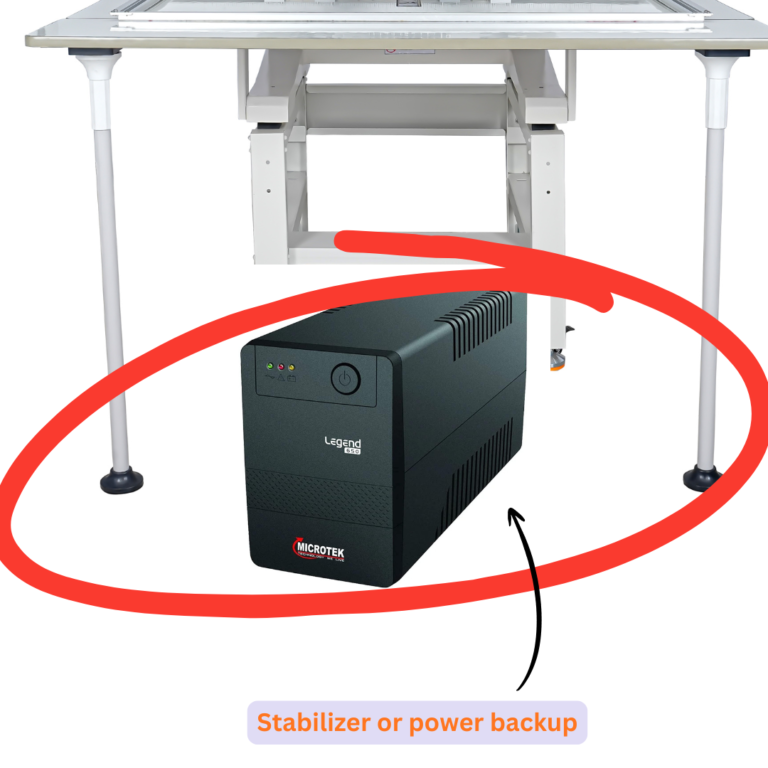
Power Protection: Given local conditions, always use stabilizers or UPS units to protect the machine from power fluctuations.

9.3 The Local Service Advantage

Because SS Creations is based in Tiruppur, you have a safety net. Spare parts and professional service are much easier to obtain compared to imported machines, ensuring your business stays up and running.

10. Frequently Asked Questions (FAQ)

Here are answers to the most common questions regarding embroidery machines in Coimbatore.

Q1: What is the typical single head automatic 12 needle embroidery machine price in Coimbatore?

A: Buyers sourcing from Julee in Tiruppur can expect a price range of roughly ₹3.9 lakh to ₹4.9 lakh plus taxes. This depends on the specific model and whether you add features like sequins or beading devices.

Q2: Are these machines really suitable for home use?

A: Yes. The single-head 12-needle machines are designed with a compact footprint and operate on 1 HP / 220 V power, making them very viable for home-based businesses, provided you have the space.

Q3: Can I use the same machine for boutique work and bulk uniform orders?

A: Absolutely. These machines are versatile. Many boutiques use them for intricate designer work, while also utilising their high speed for small bulk runs when necessary.

Q4: How difficult is it to learn how to operate the machine?

A: Julee’s machines feature a 10-inch touchscreen control panel and computerized automation. They are designed to be approachable for tailors and entrepreneurs, even those new to automated embroidery.

Q5: How do I buy a Julee machine in Coimbatore?

 A: You can contact SS Creations/Julee directly through their official website or contact numbers. They supply machines from Tiruppur, handle installation at your location in Coimbatore, and provide local support.

Conclusion

Searching for the right single head automatic 12 needle embroidery machine price in Coimbatore leads to one clear conclusion: the best value and support lies just next door in Tiruppur.

By choosing a locally manufactured machine from a reputable brand like Julee (SS Creations), you are not just buying a piece of hardware. You are investing in a partnership that understands your market, offers reliable service, and provides the versatility to handle everything from bridal sarees to corporate uniforms.

Whether you are a home entrepreneur or a boutique owner, these machines offer the industrial power you need with the local support you deserve. We hope this guide has clarified your options and helps you take the next step in growing your textile business.

For the latest quotations and specific model availability, we recommend reaching out directly to Julee (SS Creations) in Tiruppur. Fill the form, a representative will reach you shortly. 
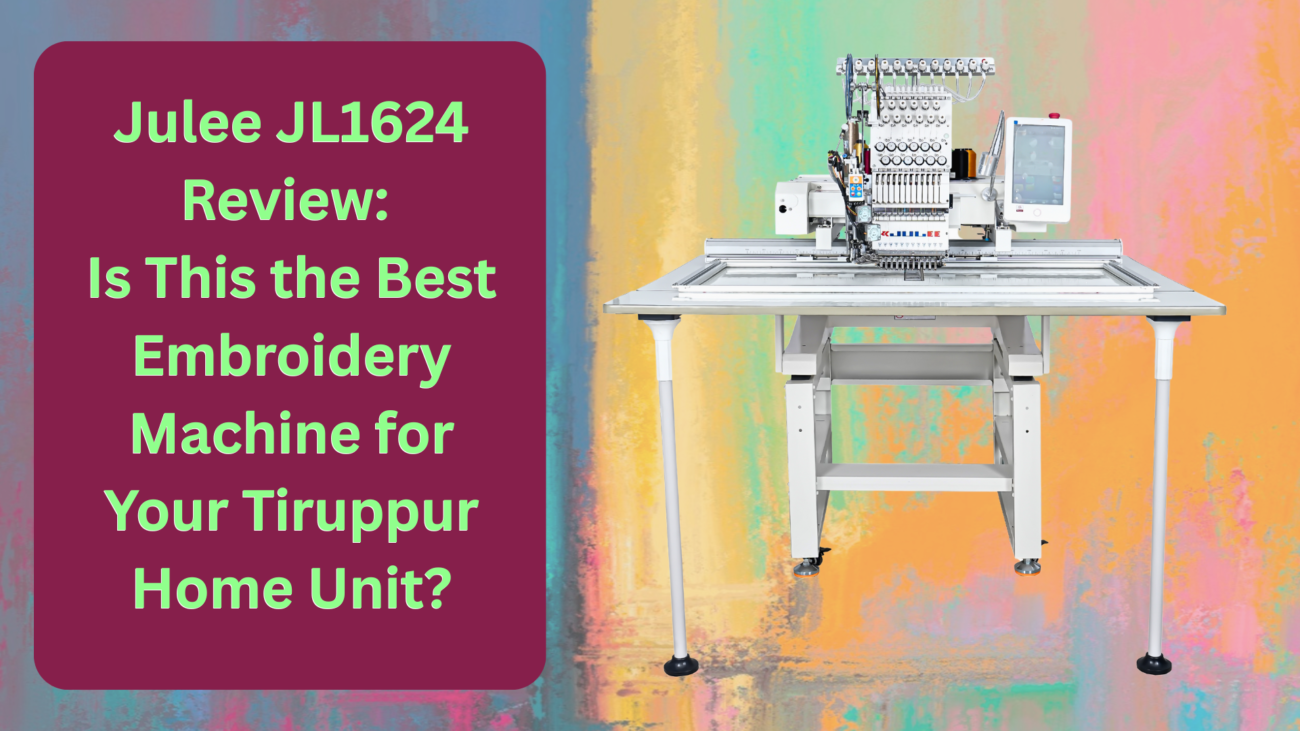
Julee JL1624 Review: Is This the Best Embroidery Machine for Your Tiruppur, India Home Unit?

Julee JL1624 Review: Is This the Best Embroidery Machine for Your Tiruppur, India Home Unit?

For garment manufacturers in Tirupur, choosing the right machinery is a balancing act. You need something fast enough to handle volume, precise enough for complex designs, but compact enough to fit in a smaller unit.

Enter the Julee JL1624. This machine has become a popular choice in the single-head market. It offers the versatility needed for sampling and small-to-medium orders without the massive price tag or floor space required by giant multi-head machines.

Julee JL1624 Review: Is This the Best Embroidery Machine for Your Tiruppur, India Home Unit?
JL1624 Single Head Embroidery Machine

In this guide, we break down everything you need to know about the Julee JL1624—from its technical specs and price to exactly how to set it up in your factory on PN Road or Appachi Nagar or anywhere in Tiruppur, Tamil Nadu, India. 

1. What Makes the Julee JL1624 Special? (Technical Specs)

The Julee JL1624 is a fully automatic single-head embroidery machine. But what does that mean for your daily production? Here is the breakdown in a few points.

12 Needles = 12 Colors

The standout feature is the 12-needle configuration.

  • The Benefit: You can thread 12 different colors at once. When the design changes color, the machine automatically switches needles.
  • Why it matters: You don’t have to stop the machine to manually change threads. This saves huge amounts of time on colorful designs like saree borders or kids’ wear.


Julee JL1624 Review: Is This the Best Embroidery Machine for Your Tiruppur, India Home Unit?

Large Work Area

Most compact machines have tiny worktables. The Julee JL1624 offers a generous 400mm x 600 MM worktable (though some local setups might be interested on 500 x 1000 MM, 500mm x 1200mm and so on).

  • Real-world use: This size is perfect for handling the fabric panels or elaborate saree borders without needing to constantly re-hoop the fabric.
Julee JL1624 Review: Is This the Best Embroidery Machine for Your Tiruppur, India Home Unit?

Speed & Build

  • Speed: It runs at roughly 1000 RPM (Rotations Per Minute). While some other variations hit 1200 RPM (you can check JL MY1624, JL TM1624 and etc), 1000RPM is a “sweet spot” that balances speed with thread safety (less breakage).
  • Build: Made with Mild Steel (MS), it is heavy enough to stay stable and not vibrate excessively during high-speed stitching.
  • Power: It runs on standard 220V (Single Phase), meaning it works with the standard power setup found in most Tirupur industrial sheds

2. Pricing Analysis: What Does it Cost in Tirupur?

Budget is usually the deciding factor. The Julee JL1624 sits in the “Base-Range” category—it is more reliable than cheap generics but far more affordable than high-end Japanese brands.

Here is the current market snapshot for 12-needle models:

Machine TypeApprox. Price Range
Generic Single-HeadStarting at ₹ 4,30,000
Julee JL1624 (Standard)₹ 3,90,000
Julee (Premium/Package)Up to ₹ 5,40,000

Buyer’s Tip: These prices often exclude GST and shipping

julee single head embroidery top model
Julee Top Model JL TM1624 (click to Read more)
single head embroidery machine - mid model - julee embroidery
Julee Mid Model JL MY1624 (Click to Read)

3. Setting Up Your Home Factory: A Checklist

Buying the machine is just step one. To get the Julee JL1624 running smoothly in hubs like PN Road or Palladam, you need to prepare your floor.

Step 1: Space Planning

Don’t underestimate the footprint. Even though the machine is compact, the moving frame needs room.

  • Machine Weight: ~300 kg.
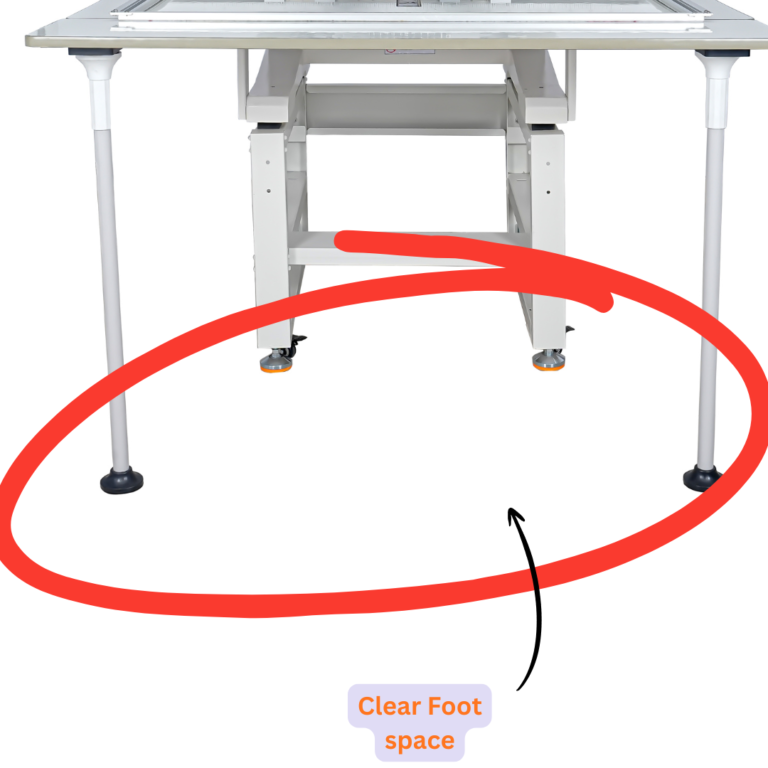
  • Clearance: You need at least 5×5 feet of clear space per machine. This ensures the hoop can move freely without hitting a wall and gives your operator room to work.
Julee JL1624 Review: Is This the Best Embroidery Machine for Your Tiruppur, India Home Unit?

Step 2: Power Protection

The machine uses computerized panels that are sensitive to power spikes.

Requirement: Since industrial zones often have voltage fluctuations, installing a good Industrial Stabilizer is mandatory to prevent frying the motherboard.

Julee JL1624 Review: Is This the Best Embroidery Machine for Your Tiruppur, India Home Unit?

Step 3: Local Support & Maintenance

You need to know who to call when things break. Fortunately, Tirupur has a strong support network for this brand:

  • Dealers: SS Creations (Ramaiyah Colony, Muniyappan Kovil Street, Near Miller Stop) and Julee Embro Tech Pvt Ltd (same location of SS Creations) are verified suppliers for Julee models. You can talk to them directly on: +91 88254 78070

Service: For repairs and technical support, SS Creations & Julee Embro Tech has  specialized technicians in units, ensuring your downtime is minimal.

Conclusion: Is it Worth the Investment?

The Julee JL1624 is a smart investment for manufacturers who need to step up from basic sewing but aren’t ready to spend ₹12 Lakhs on a Japanese unit.

With a price point between ₹ 3.9L and ₹ 4.4L, it offers the professional 12-needle capability and frame size needed for serious home work. It is specifically well-suited for units producing samples, saree borders, or medium-volume detailed embroidery.


What Is the Best Computerized Embroidery Machine in 2025? - My honest review

What Is the Best Computerized Embroidery Machine in 2025? – My honest review

A New India, A New Kind of Woman Entrepreneur

I am 25 years old living in Tirupur, South India and my first understanding of this hard work did not come from a book. Isn’t it? so it came from watching many women across my region and my neighbours bend over sewing machines late at night.  My close aunties carefully finished blouse borders and returned small rooms into quiet workshops where they stitched thread by thread. They never called themselves entrepreneurship instead, it was simply responsibility, survival and hope. 

But something has changed.

In India, today is moving forward with confidence, and so are its women. In 2025 embroidery is no longer seen as just a traditional skill passed from one generation to another. It has become a serious business opportunity and source of financial Independence, the door way to self-respect. So what once stayed hidden inside homes is now stepping into the light as the professions with pride.

Across the South Indian’s major cities, Women are courageously choosing to begin again. Some start from a single room in their homes, some open small workshops, some build boutique brands with their own names stitched into every piece. There is a quiet revolution happening that one where women choose machines is not just a work, but it stands on their own feet.

The demand is real and growing, customized clothing, bridal embroidery, uniforms, ethnic wear and designer pieces are no longer limited to big cities. Customers want personal stories behind their garments. They want craftsmanship. They want authenticity. and women are ready to deliver.

Yet, with this new freedom comes a very personal question – one that carries both excitement and fear:

“What is the best computerised embroidery machine in 2025 for someone like me?”

Someone who dreams big but starts small.

Someone who wants stability, not risk.

Someone who believes in growing step by step.

The question is not only about technology it is about trust, confidence, and choosing the right beginning. Because for many women in my region today, an embroidery machine is not just a purchase, it is a first step towards their independence, their dignity, and future they can finally call their own. 

In 2025, the first and foremost comes into my mind is “Julee” from SS CREATIONS Tirupur. I felt the story of SS Creations has introduced the signature brand where the reverse arrow is called for roots of embroidery. 

Lets Explore Julee - The real computerized embroidery heroes:

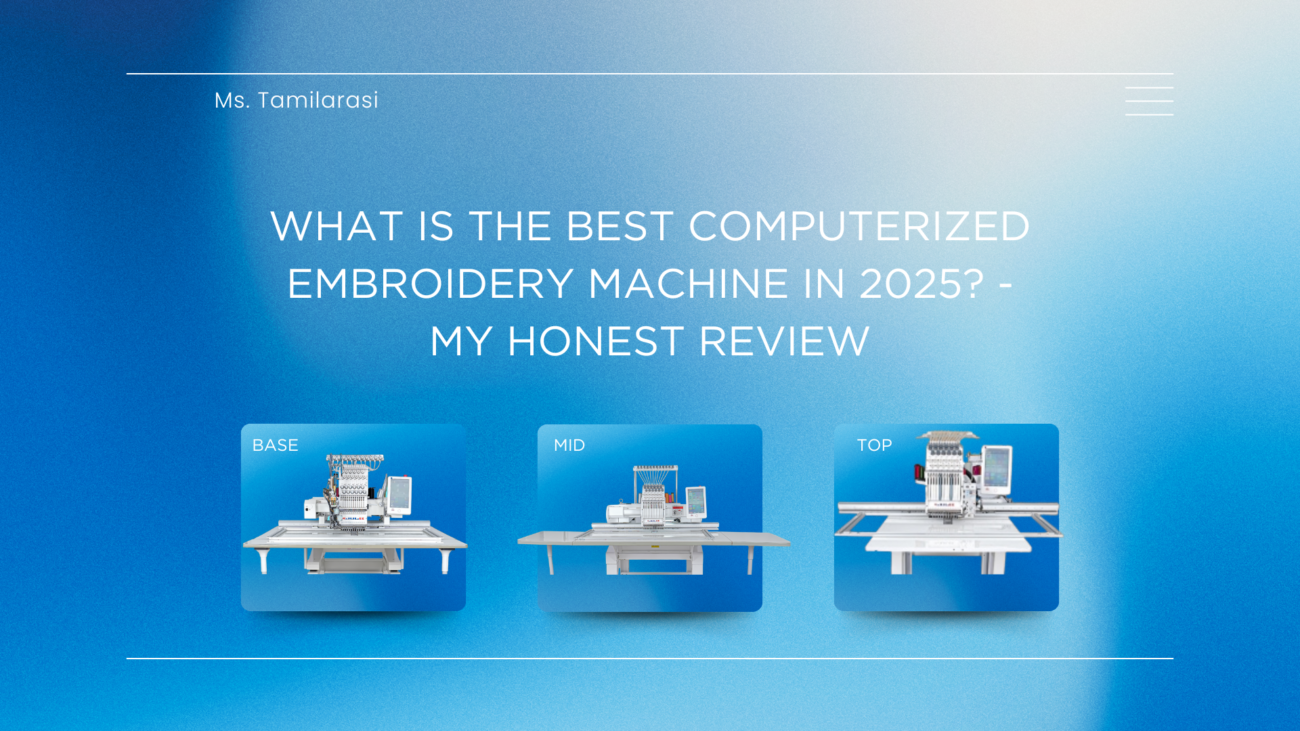
The Julee brand is committed to delivering reliable, efficient, and scalable embroidery solutions for modern businesses across the region. SS Creations has a wide range of Julee machines starting from single head embroidery machines – base, mid, and top model with unique features to completely customized upto 42 heads for big commerce trade. 

With all the above, I loved the special model for my journey: Single Head computerized embroidery machine MID JL MY2040 – frame size 500*1000mm because it aligned perfectly with the stage of my entrepreneurial journey.

single head embroidery machine - mid model - julee embroidery
Photo Credit: Julee MY2040

So at this point in my business, I need more than a beginner level machine because my existing orders were increasing, designs were becoming more detailed, and customers expected consistency and quality. The mid level offered me exactly the balance and professional capacity without unnecessary complexity.

The right frame size for the real business Growth

The 500*1000mm frame size was the decisive factor for me. It provides enough working area to handle large embroidery designs such as saree pallus, dupattas, kurti panels, uniforms logos, and boutique orders without constant repositioning. This not only improves efficiency, but also maintains design accuracy for someone growing step by step. The frame size allows flexibility. So the small customized jobs on one day and large commercial orders on another day. so it supports growth without forcing and immediate shift to an industrial scale setup. 

Performance That Matches My Daily Workflow

The Single Head MID JL MY2040 delivers stable performance throughout long working hours, which is essential when managing deadlines and multiple client expectations. Its smooth operation, precise stitching, and consistent output help maintain professional standards—something that matters deeply when building a brand reputation.

As a woman entrepreneur, reliability is not optional. I needed a machine that works as hard as I do, without frequent interruptions or technical uncertainty. This machine provides that confidence.

Conclusion: A Machine That Grows With Me

For my journey in 2025, the MID JL MY2040 – 500 × 1000 mm frame size is not just equipment. It is a partner in progress. It represents a thoughtful investment—one that values consistency, creativity, and confidence. 

As my business continues to grow, this machine stands as proof that choosing the right technology at the right time can transform effort into excellence—and ambition into achievement.

In 2025, embroidery is not just work.

It is confidence, courage, and a future built with our own hands.

Article by: Ms.Tamilarasi.

aari embroidery machines reviews and buying guide

Aari Embroidery Machine: Complete Guide, Features, Prices & Buying Tips [2025]

Last Updated: Nov 2025

The year 2025 has many revolutions of embroidery and I am not too late sharing this article about the importance of Aari embroidery machines.

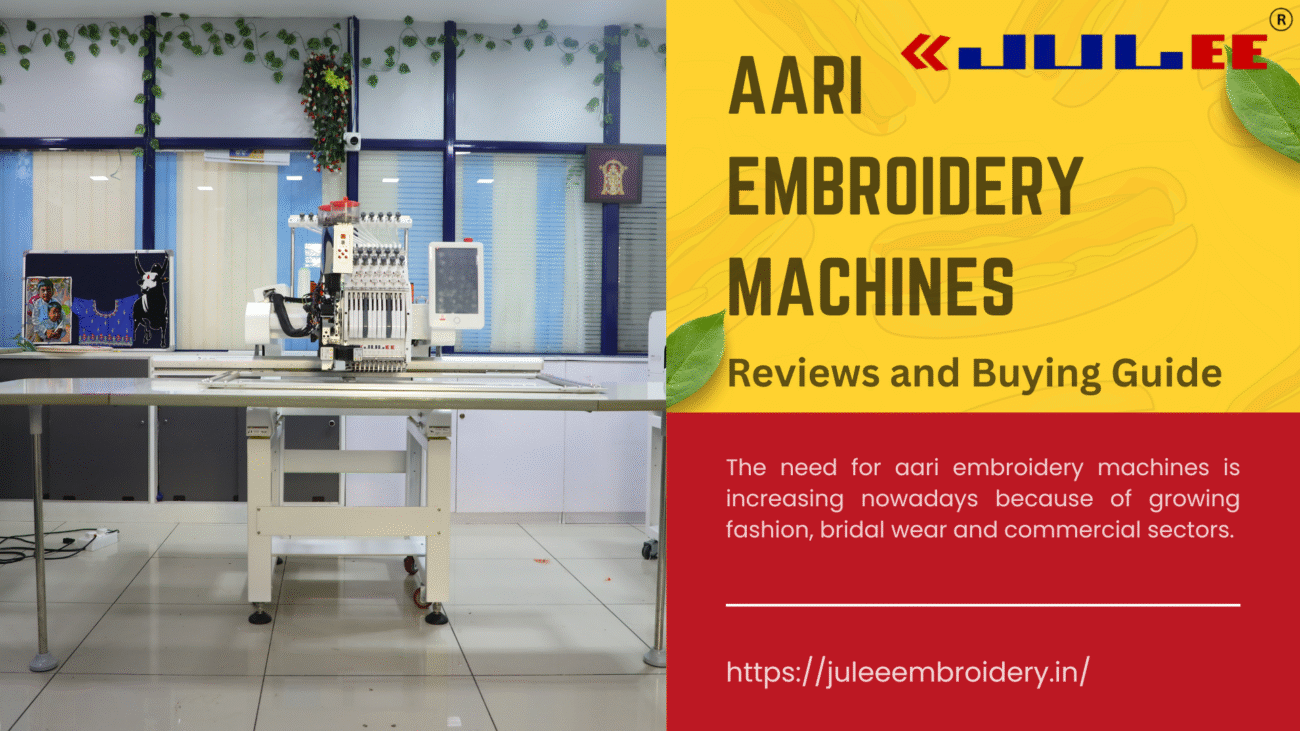
Aari embroidery machines are changing the manual embroidery, making it quicker and more efficient. The need for aari embroidery machines is increasing nowadays because of growing fashion, bridal wear and commercial sectors. 

In this article, I will cover the aari embroidery machines features, prices and buying guides will help you to make a smart choice.

Key takeaways

  • Understanding the importance of embroidery machine in Indian textile industry
  • Exploring the growing demand of our embroidery machines in various sectors
  • Learning about the key features to look for an array embroidery machines
  • Comparing the prices of different are embroidery machines
  • Getting the expert buying tips for embroidery machines.


Understanding Aari Embroidery Machine

You need to understand that aari embroidery machines are specialised tools that use a hooked needle mechanism to create traditional, intricated designs of Aari work. They offer a significant leap in the efficiency and precision compared to the traditional handmade methods, and vary from a basic manual model to an advanced, computerized system.

History and origin of Aari embroidery

Aari embroidery originated in the 12th century Gujarat region among the “Mochi” or “cobbler” communities whose initiated usually hooked needle called “Aari”. They worked on leather goods initially, then declined the skilled artisans expertly adapted to the year tools and created intricate designs on fine fabrics. 

How Aari Embroidery Machines Work?

how aari embroidery machine works? julee aari embroidery machine

Aari embroidery machines automate the complex work tasks traditionally done by hand with the hooked needle. The machines are highly specialised computerized system design to replicate the signature of “chain stitch” at high speed and with the incredible decision the core of the process involves the digital designs that are loaded into the machine’s computer. 

The core of the process involves digital designs that are loaded into the Machines computer and it translates this pattern into the precious coordinated physical movements. The fabric is held taut in the moving frame while hooked needles move rapidly up and down through the material. The thread is caught by the hook and pulled into the loop so the subsequence stitch passes through the previous loop, forming the continuous and ornamental chain. 

The automatic coordinations between the needle’s actions and the frame’s movement allows the embroidery machines to reproduce the intricate design flawlessly. While considering the industrial versions often features multiple sewing heads for a mass production that transforms a labour intensive ancient art form into the efficient, modern manufacturing process for elaborated textiles. 

What is the difference between Aari and Maggam work machines?

Aari and maggam work machines are two names for the exact same type of embroidery equipment. The main difference between the terms is purely linguistic. Aari is common in the regions like Kashmir and some parts of India, while maggam is Telugu word for the specific type of hooked needles are the Loom used in this craft. 

So both machines use the hooked needle to create a distinctive stain stitch. The real difference in the world of aari embroidery and maggam embroidery lies in how they are operated. 

manual machine: The required artisan guides the fabric manually, creating the designs freehand. The speed and quality depends entirely on the operator’s skills. They offer creative flexibility for unique and bespoke designs. 

Automatic or computerised Machines: These hightake versions load digital patterns and use a computer to move the fabric frame with extreme precision. The Automatic stitching process allows for a mass production, consistent result and often incorporates features for automatically adding embellishments like beads or sequins.

Key differences include:

  • Embroidery Technique: Aari uses chain stitch, while Maggam involves more complex, hand-guided stitches.
  • Fabric Compatibility: Aari machines can handle various fabrics, whereas Maggam work is typically done on thicker, more luxurious fabrics.
  • Machine Complexity: Aari machines are often more mechanized, while Maggam work may involve more manual intervention.

Types of Aari Embroidery Machines

Aari embroidery machines can be broadly categorised into two primary types based on their operational mechanism, which is the manual and automatic

The manual and automatic aari embroidery machines categories catered to different needs ranging from traditional craftsmanship to high volume industrial Productions.

1. Manual aari embroidery machines:

Aari Embroidery Machine: Complete Guide, Features, Prices & Buying Tips [2025]

The manual aari embroidery machines often referred to as hand operated machines represent the traditional method of creating the intricate embroidery. They are non computerised and require significant skills for the artisan. 

mechanism and operation:

The core of manual machines is simple mechanical head and work table designs to hold a large, taut embroidery frame. The artisan uses a specific hooked needle either maggam needle with the one and on the top of the fabric while the other hand is positioned beneath to feed and loop the thread. 

The operator manually guides the fabric frame along the traced or free-hand designs controlling every stitch’s placements, length and direction. 

Characteristics

This method is labour intensive and slower than automated processes, but it offers unparalleled creative control. Artisans can easily switch between the various thread types, thickness and quickly incorporate diverse materials like Zari, silk or cotton threads. 

Best Suited for

manual machines are the choice of traditional craftspeople, small independent designers,  and those creating high-and couture garments with exclusivity and artistic touch are Paramount. 

They are highly valued in niche markets for their authentic, non-uniform finish. 

2. Automatic (Computerised) Aari Embroidery Machines

computerised computer aari embroidery machine - julee aari embroidery machine

Automatic or computerised aari embroidery machines represent the modern industrial evolutions of craft. The computerised machines are highly sophisticated, computer-controlled systems designed for Speed, precision and mass production. 

The term “Aari” is the context that refers to the specific chain stitch mechanism the machine utilizes.

Mechanism and Operations

The processes begin with a digital design(often in a specific embroidery format like DST or EMB) being loaded into the machine’s control panel. The computer translates this digital design into precise X and Y axis movements for the embroidery frame. 

A synchronised system ensures the hooked needle move ups and down rapidly, while the frame positions of the fabric for each stitch, creating a perfect chain stitch loop everything without manual interventions for the design guidance.

Characteristics

The computerised automatic aari embroidery machines are defined by the efficiency, speed and consistency. It can run for a long period of time with minimal supervision, producing thousands of identical garments or fabric swatches per day. 

The Machines often feature automatic thread trimmers, colour changes, and broken thread sensors. 

Best suited for

Large Textiles factories, commercial embroidery business, and manufacturers required inconsistent quality and high output for ready-to-wear clothing, home furnishing, and accessories. 

Sub-Categories of Automatic (Computerised) Embroidery Machines:

So within the automatic or computerised embroidery machine category for the distinctions exist based on production scales and capacity, there are three major categories such as, 

Aari Embroidery Machine: Complete Guide, Features, Prices & Buying Tips [2025]

Single head aari embroidery machines are the versatile workhorses of personalized and small-batch production. It connects and clears the bridging gap between traditional manual methods and massive industrial setup. so these single head aari embroidery machines offer powerful computer driven solutions for hobbyists, independent designers, small business owners who require professional results without industrial footprint or capacity. 

The compact Powerhouse

Single head aari embroidery machines function identically to its multi-head counterparts: it uses a specialised hooked needle to create the intricate aari chain stitch automatically, with the following digitised design in the software. The crucial distinction is in its configuration it has one complete set of needle mechanism and single embroidery field. 

Space Efficiency: 

With a significantly smaller footprint than industrial giants,  the single head aari embroidery Machines fit comfortably into home studios, living rooms, small workshops or any retail environment that you own or rent. 

They are perfectly suited for on-demand productions and one-off customisations. The artisan can provide a single highly detailed garment efficiency without the setup costs associated with running a large, multi-head factory line. 

Single Head Aari Embroidery Machines Application

The strength of the single head aari embroidery machines lies in its ability to adopt in diverse projects that includes bespoke’s culture –  That designers add elaborate motifs to blouses, sarees, kurtis, and wedding attire. Accessory embellishment that many models feature a “free-arm” capability allowing them to handle awkward,  pre-sewn items like caps, sleeves, socks, and tote bags with ease. 

Multi-Head Aari Embroidery Machines

multi-head aari embroidery machine - julee embroidery machine tirupur, india

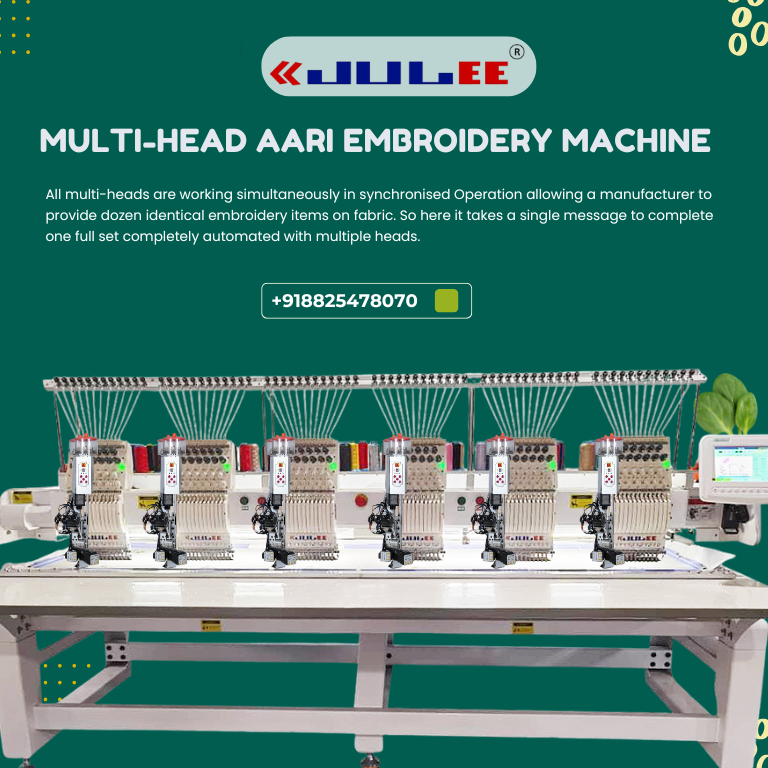
Multi-head aari embroidery machines are the industrial backbone of large scale textile production, engineered specifically for its speed, consistent, and massive output. Unlike the single head aari embroidery machines, the multi-head systems features, series of multiple heads the name itself, often ranging from 4 heads to 20 heads, or even more. All multi-heads are working simultaneously in synchronised Operation allowing a manufacturer to provide dozen identical embroidery items on fabric. So here it takes a single message to complete one full set completely automated with multiple heads. Fully automatic computer control operations simply load the digitized designs into the Central system and the machine executes the intricate aari (chain stitch) patterns with high precision and minimal supervision.

These robust mult-head aari embroidery machines are built for continuous high-volume operation featuring advanced functionalities like automatic thread trimming, colour changes and events specialised attachments for integrating sequins, carding, and beads seamlessly. The sheer efficiency and capacity make them and indispensable assets in commercial factories and production houses that supply into your ready-to-wear apparels, home furnishing, and mass market embroidered goods, effectively transforming the traditional labour-intensive art of aari into streamlined, industrial process capable of meeting global demand.

Computerized vs. Manual Aari embroidery Machines

The choice is yours. However, choosing between computerized and manual aari embroidery machines depends on your specific needs and preferences. The computerized aari embroidery machines have advanced features and precision where manual machines offer a traditional feel.

Machine TypeFeaturesBest Use Cases
Single HeadUser-friendly, affordableSmall businesses, hobbyists
Multi-HeadHigh production capacityLarge enterprises, high-volume production
ComputerizedAdvanced features, precisionBusinesses requiring intricate designs
ManualTraditional approachHobbyists, small projects

Key Features of Aari Embroidery Machines

Aari embroidery machines, particularly the modern automatic versions come-up with a range of sophisticated features designed to increase efficiency, precision, and versatility in textile decorations. 

Computer control: The system that reads digital design files transferred via USB, Wifi or other parts and translates them into machine moments. 

Automatic Operation: Key automated functions include an automatic threat trimming, automatic colour changes on multi needle or multi-head machines, and power failure protections to resume work after an outage. 

High-speed stitching: Aari embroidery machines can achieve high speeds often ranging from 400 to 1200 stitches per minute(SPM), significantly increasing production output compared to manual work. 

Precise Stitching: The automated machines control ensures high precision and uniform stitch quality throughout the design. 

Adjustable Stitch Length: Operators can easily adjust the stitch length to achieve different textural effects, such as the standard chain stitch or the denser moss/drop stitch. 

Multi-Head Configuration: Industrial machines feature multiple heads ranging from two heads to over 24 heads that work simultaneously, allowing them mass production of items.  

Multi needle capability: Many single head professional machines offer multiple needle examples 6 or 12 needles, reducing the need of manual thread changes for multi colour designs. 

Mixed functions devices: the machines have advanced relationships that can combine aari/Chenille stitching heads with other attachments for flat embroidery, cording, and automatic sequin or bead application, allowing for complex, mixed-media designs in a single process.

Can Aari embroidery machines do sequin and chenille work?

Aari Embroidery Machine: Complete Guide, Features, Prices & Buying Tips [2025]

Aari embroidery machines are more versatile than their name suggests; The aari embroidery machines are fully capable of producing both elaborate chenille and sequin embellishments. This adaptability, however, depends entirely on the specific configuration of the machine.

Essentially, “Aari” and “chenille” refer to the same base stitching mechanism: a hooked needle creating a textural, raised chain or loop stitch. Therefore, any machine designed for Aari work is inherently a chenille machine. The operators can adjust the stitch length to create a tight, defined chain stitch to a looser, denser “moss” stitch effect, which provides that soft, and fuzzy chenille texture.

To incorporate sequins, the machine requires an additional, specialized piece of hardware: a sequin attachment device. High-end, “mixed-function” industrial machines combine their Aari/chenille heads with these devices. The machine’s computer synchronizes the sequin feeder with the needle, automatically placing and stitching down sequins of various sizes and shapes as the design is executed.

In short, while all Aari machines do chenille work, only the advanced, specialized models that integrate sequin feeders can do both, offering immense creative potential for complex, multi-textured designs.

Applications of Aari Embroidery Machines

Aari embroidery machines are widely used across the textile and fashion Industries, due to their increasing in-demand and creating the unique, textual chain stitch.  The primary applications span from traditional apparel to modern accessories and home decor. 

Bridal Wear: Wedding sarees, lehengas, blouses, sherwanis and zardozi (metallic) threads for royal and luxurious look. 

Traditional Attire: Everyday traditional garments like kurtis, anarkalis, cholis, dupattas, and general sarees. 

Modern and casual wear: Subtle or bold designs to modern dresses, gowns, tunics, shirts, jackets, hoodies and t-shirts. 

Uniforms and Badges: durable chain stitch designs for professional uniforms, school apparel, and team/military badges. 

Caps/Hats/Bags: Widely used for adding logos and designs to caps, hats and bags.  

Bed linens and Spreads: Large-scale designs to bedspreads, blankets and bed sheets. 

Curtains and drapery: Embroidering ornamental patterns on curtains and linens. 

Cushion covers and pillows: Adding customized or decorative motifs to cushion covers and other soft furnishings. 

Embroidery Job work: Business offering specialised Aari and Chenille embroidery services to fashion designers and other manufacturers.

Aari Embroidery Machine Specifications Comparison

The most critical aspects when comparing the specific models specifications resolve around production capacity, speed and versatility. Here you can see the comparison, 

When comparing Aari embroidery machines, the most critical specifications revolve around production capacity, speed, and versatility. This is largely determined by the machine’s configuration as either a manual, single-head automatic, or multi-head automatic model

Specifications comparison: Manual vs. Automatic

SpecificationManual Aari Embroidery MachineAutomatic (Computerized) Aari Machine
OperationManual, universal feed mechanism.Fully automatic; computer controls frame and needle movement.
Production speedSlower; dependent on operator skill.Fast; industrial models exceed 1200 SPM.
PrecisionVariable; dependent on artisan's skill level.High; computer control ensures uniformity.
Design inputManual; designs are traced or freehand.Digital; designs loaded via USB, WIFI or network.
Stitch typeManual chain stitch, can be adjusted for moss/drop stitch.Computerized chain stitch, with adjustable density for moss/drop stitch.
Multi-colorRequires manual thread changes.Automatic color changes on multi-needle models.
EmbellishmentsIntegrated manually during stitching.Automated sequin and cording attachments on specialized models.
CostMuch lower initial investment.Significantly higher initial investment.

Specifications comparison: Automatic single-head vs. multi-head

SpecificationSingle-Head Automatic MachineMulti-Head Automatic Machine
Number of headsOne.Two or more (e.g., 2, 4, 6, 12, 24+ heads).
Production capacityLower; ideal for custom or small-batch runs.High; essential for mass production.
SpeedVaries, but often faster than multi-heads for a single item.Fast; simultaneous embroidery multiplies production speed.
VersatilityExcellent for small items, including caps and sleeves with a free-arm.Best for large-scale production of flat goods or garments.
Space requiredCompact and space-efficient.Requires a larger, industrial workspace.
Initial costMore affordable; good for startups or hobbyists.Higher; for serious commercial expansion.
Operator timeContinuous operator interaction needed for new items.Less per-item operator time; one operator can oversee many heads.

Aari Embroidery Machine Price Guide 2025

There are a wide range of aari embroidery machines available for you. From affordable hand-operated to industrial grade, multi-head computerised aari embroidery machines, the prices may vary significantly based on the level of automation and production capacity. 

Entry-level Semi automated Aari Machines: 

The entry-level semi automated embroidery machines available approximately INR 65,000 through Tradeindia or Indiamart portals. It is the good option for small workshops and individuals just starting manual aari work. 

Single Head computerised Aari Machines: 

The Single Head computerised aari machines are suitable for small business to boutiques that need to produce custom designs with higher precision, speed, and accuracy. 

HSW 2032 Multi-Needle Computerised Embroidery Machine: The single head model listed on bazar91.com is priced around 4,85,000 INR, while not exclusively an aari machine, it can be configured for multi-needle embroidery work. 

Julee JL 2040 Aari Embroidery Machine: This single head model from Julee priced at approximately 4,60,000 INR listed on Julee website, and Indiamart. 

Multi-Head computerised aari machines: 

Designed for large-scale industrial use, the multi-head from double to 24 heads are major investment but offer the high speed, and productivity for mass production. 

Factors influencing price: 

You have to consider the following factors that affect the cost of aari embroidery machines by, 

  1. Level of automation: Manual or hand-operated tools for affordable, Single head to mult-head for expensive to most expensive.
  2. Number of heads: Multi-head machines designed for industrial-level outputs.
  3. Features: Additional features like sequin, beads work, different stitch types and software.
  4. Brand and manufacturer: Reputable manufacturers for commercial embroidery machines like SSCREATIONS’s JULLE Embro Tech Pvt Ltd. 
  5. Conditions: Used (refurbished) machines or new machines available.

Maintenance and Care for Aari Embroidery Machines

Here are the few minutes of care on your machine can prevent the major problem listed down, 

  • Cleaning:
    • Remove lint and dust: Use a soft brush, a can of compressed air, or a specialized vacuum attachment to gently remove any accumulated lint, dust, and thread snippets from the bobbin area, under the needle plate, and around the tension discs. Buildup can cause tension problems and jam the machine.
  • Lubrication (Oiling):
    • Follow the manual: Always refer to your machine’s user manual for the correct oiling points and recommended lubricant type. Not all points need daily oiling.
    • Apply a single drop: Apply a single drop of approved machine oil to the specified moving parts, such as the hook race and needle bar area. Over-oiling can stain fabric.
  • Tension Check:
    • Inspect thread paths: Ensure all thread paths are clear and free of debris.
    • Adjust as needed: Check and adjust the upper and bobbin thread tensions to suit the specific fabric and thread type you are using. Correct tension prevents frequent thread breaks and ensures even, high-quality stitches.
  • General Inspection:

Check for oil leaks: Visually inspect the machine for any excessive oil leaks that may indicate a problem or the need for professional service.

Periodic Service Requirements

Daily care must be supplemented with regular professional maintenance. The frequency depends on your usage (e.g., every 6-12 months for heavy commercial use).

A qualified technician will perform a comprehensive service that typically includes:

  • Motor and Gear Inspection: Checking the internal mechanisms for wear, tear, or misalignment.
  • Embroidery Frame Calibration: Ensuring the pantograph (frame movement system) is moving smoothly and accurately, which is vital for precise design placement.
  • Belt Tensioning: Adjusting and inspecting drive belts to ensure proper synchronization of machine components.
  • Deep Cleaning: Accessing hard-to-reach areas of the machine to remove compacted lint and debris that a daily cleaning cannot reach.
  • Software Updates: Installing the latest firmware or software updates provided by the manufacturer.

Part Replacement: Replacing any worn-out components like needles, specific gears, or tension springs.

Extending Machine Lifespan

Beyond routine maintenance, several best practices will help maximize your machine’s operational life:

  • Follow Manufacturer Guidelines: Adhere strictly to all instructions in your user manual regarding operation, maintenance schedules, and approved accessories.
  • Use Quality Supplies:
    • Threads and Needles: Invest in high-quality, reputable brand threads that produce less lint. Use the correct size and type of needle for your specific fabric and project, and change them frequently (e.g., every 8 hours of use) as dull or bent needles cause fabric damage and thread breaks.
  • Proper Storage Environment:
    • Dust Control: Keep the machine covered with a dust cover when not in use.
    • Environment: Store the machine in a dry, stable-temperature environment. Extreme humidity or temperature fluctuations can damage electronic components and cause rust.

Operate Within Limits: Do not push the machine beyond its recommended maximum speed or attempt to embroider on materials that are too thick or unsuitable for its specifications.

Frequently Asked Questions

The most critical feature is the use of a specialized hooked needle system that creates a continuous chain stitch, which is the signature of Aari work. While a regular sewing machine uses a lock stitch formed by a top needle and a bottom bobbin, the Aari machine pulls loops of thread through the fabric surface to form a raised, textural chain, mimicking the traditional hand embroidery technique but at high speed and with computer-guided precision.

The computerized control system is the brain of the operation. You load a digital design file (like a DST or EMB file) into the machine via USB. The computer translates the design data into precise X and Y coordinates. It then directs stepper motors to move the fabric frame in sync with the rapid vertical motion of the needle, ensuring every single stitch is placed exactly where the design dictates, creating intricate patterns flawlessly.

A single-head machine has one full set of needle mechanisms and is ideal for custom work, samples, or small home businesses due to its compact size and versatility. A multi-head machine has several identical heads arranged linearly (e.g., 4, 6, 12 heads or more), all working simultaneously to embroider the same design on multiple products at once. You would choose a multi-head machine for mass production and industrial output, while a single-head machine is better for personalized, on-demand projects.

Aari embroidery machines are built for speed, typically operating between 700 and over 1000 stitches per minute (SPM). This high-speed stitching drastically increases output compared to manual work, where an artisan might produce a few hundred stitches in the same timeframe. This efficiency is crucial for commercial businesses that need to meet tight deadlines and produce high volumes of embroidered goods.

Yes, advanced industrial Aari machines often come with specialized “mixed-function” devices. These attachments can automatically feed and secure sequins, beads, or cording alongside the Aari stitch, all within the same design run. This feature is invaluable for creating complex, multi-textured designs without requiring manual intervention or switching machines.

Thread break detection uses intelligent sensors to continuously monitor the thread path. If a thread snaps during operation, the sensor instantly detects the break and automatically stops the machine. This prevents the machine from continuing to “sew” without thread, which would ruin the fabric and the design progress. It saves material, time, and ensures a flawless final product with minimal supervision.

Modern Aari machines are designed with user-friendly interfaces, typically large LCD touchscreens. While the underlying technology is complex, the operation itself is intuitive. Users can easily load designs, change colors, adjust size, and manage basic operations through the screen interface, making them accessible to operators with basic training.

This feature allows the operator to control the density and length of each chain stitch loop. By adjusting this parameter, one can create different effects: a standard Aari chain stitch is open and flowing, while shortening the length creates a denser, raised “moss” or “drop” stitch, adding different textural dimensions to the final embroidery.

Yes, the machines are versatile and can handle a variety of threads, including silk, cotton, rayon, metallic (zari) threads, and even specific chenille yarns. The durability and construction of the machine allow for the tension to be adjusted to accommodate different thread thicknesses and compositions effectively.

Aari machines, especially commercial and industrial models, are built for longevity and heavy use. They typically feature robust, heavy-duty metal construction and commercial-grade components designed to withstand continuous operation in a factory setting, ensuring a long life and reliable performance with proper maintenance.

Aari machines are highly versatile and can handle a wide array of fabrics. From light, delicate materials like silk, chiffon, and georgette to heavier textiles such as denim, canvas, and velvet, the machine can adapt. The key is proper fabric stabilization and hooping (stretching the fabric taut in the frame) to prevent puckering and ensure smooth stitching.

Yes, you need specialized embroidery digitizing software (Like DAHAO EMCAD) to create designs that the machine can read. This software allows you to map out where each stitch goes and convert the artwork into a format (like .DST or .DHP) that the machine’s computer understands. The machine also simply read a standard image file like a JPEG. and PNG

Many modern commercial Aari machines are equipped with power failure protection or memory backup features. In the event of a power outage, the machine saves its exact position and design progress. Once power is restored, the operator can resume the embroidery cycle from where it left off, preventing wastage of fabric and thread.

The maximum embroidery area varies significantly by machine type. Single-head commercial machines might offer areas around 12×8 inches or 14×14 inches. Industrial multi-head machines can handle massive areas, often working across several meters of fabric width, allowing for large, continuous designs for items like curtains or bedspreads.

Yes, they use a specialized hooked needle system, much like a tiny crochet hook. This design is fundamentally different from a standard sewing needle. The hook is essential for catching the thread loop from underneath the fabric and pulling it through the previous loop to form the signature chain stitch.

On multi-needle single-head machines or all multi-head machines, the machine can hold several different thread colors at once. The computer is programmed with the design sequence. When the machine finishes stitching with one color, the needle bar automatically shifts or the thread feed changes to the next pre-loaded color, seamlessly continuing the design without manual intervention.

DCP is an advanced feature found on high-end machines. It allows the machine to digitally control how high the presser foot rises and how hard it presses down on the fabric during the stitching cycle. This is vital for handling different fabric thicknesses and preventing the fabric from “flagging” (bouncing up and down with the needle), which ensures a perfectly flat, crisp stitch quality.

Standard Aari machines are primarily designed for the chain stitch or moss/drop stitch. However, high-end “mixed-function” industrial machines may have separate heads for standard flat embroidery stitches, allowing them to switch between the two entirely different stitching methods in one single design run.

Like all industrial machinery, Aari machines require regular maintenance, primarily routine oiling, cleaning of lint and debris, and occasional part replacement (like needles or rotary hooks). Their robust construction is designed to minimize downtime, and basic maintenance can often be performed by the operator with minimal training.

The interfaces act as the primary command center. Operators use them to import designs, adjust design size and orientation, select color sequences, monitor production speed, track thread breaks, and troubleshoot minor issues. The visual interface simplifies complex operations into intuitive menu selections.

Base model - Julee single head embroidery machine

SINGLE HEAD EMBROIDERY MACHINE

Maximizing Your Embroidery Potential: The Power of a 12-Needle Single Head Embroidery Machine

The world of embroidery has seen significant advancements in technology, allowing both beginners and professionals to elevate their craft. Among the most versatile and efficient tools in the industry is the 12-needle single head embroidery machine. This machine is a game-changer for those looking to produce intricate, high-quality designs with speed and precision.

Why Choose a 12-Needle Single Head Embroidery Machine?

A 12-needle single head embroidery machine is a perfect blend of functionality and convenience. It’s designed to handle a wide range of embroidery projects, from detailed logos to vibrant multi-color designs. Here are some reasons why this machine is a top choice:

1. Multi-Color Capability

With 12 needles, you can thread multiple colors simultaneously, reducing the need for frequent thread changes. This is ideal for complex designs requiring multiple shades and tones.

2. Compact Yet Powerful

The single head design makes it suitable for small spaces without compromising on professional-grade performance. It’s perfect for home studios, small businesses, and even event setups.

3. Versatility

Whether you’re working on caps, shirts, jackets, or flat fabrics, the 12-needle machine can handle various materials and textures with ease.

4. Efficiency

The ability to set up multiple threads at once significantly increases production speed, making it a valuable asset for businesses looking to fulfill orders quickly and efficiently.

Pro Tips for Using a 12-Needle Single Head Embroidery Machine

To get the most out of your embroidery machine, consider these tips:

  1. Regular Maintenance
  • Clean the machine regularly to prevent lint buildup and ensure smooth operation.
  • Lubricate moving parts as per the manufacturer’s guidelines.
  1. Proper Thread Management
  • Use high-quality threads to avoid frequent breakage.
  • Organize your threads to minimize confusion when setting up multiple colors.
The Ultimate Guide to Single-Head Embroidery Machines: From Hobbyist to Home Business

The Ultimate Guide to Single-Head Embroidery Machines: From Hobbyist to Home Business

The demand for personalised items such as custom cap, custom tshirts, sarees, blouse and bags print for female to male trending has opened a world of creativity and commercial opportunity for tailors to look for a machine to do it automatically in precision and versatile. For this heart movement, the birth of embroidery machines are in place.

Embroidery Machine, is a specialised device that is used to create decorative patterns, logos and integrated designs on fabric using automated or pre-programmed stitching. Unlike the standard sewing machines designed for garment constructions (seams, hems), dedicated embroidery machines focus solely on ornamental needlework. 

The embroidery machines range from single head models to multi-head for commercial units, offering hobbyists and entrepreneurs an accessible way to turn digital design into tactile, embroidery products.

In this guide, we will elaborately guide you to look into Single Head Embroidery Machine, feature, price and buying guide.

Single-Needle vs Multi-Needle Single Head Machines:

The most important decision you will make when entering into the embroidery world is choosing between a single-needle and multi-needle machine. The both fall under the single head category which means the only sew in one location at the time, but they cater to very different needs. 

Single-Needle Machine: the hobbyist entry point

The Ultimate Guide to Single-Head Embroidery Machines: From Hobbyist to Home Business
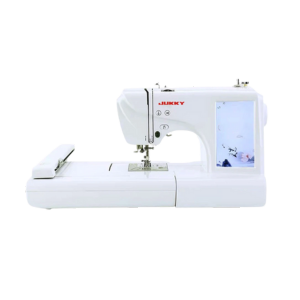
Photo Credit: Jukky

Single needle machines are the perfect choice for those starting as a new hobby testing a business idea with minimal investment. 

Pros: The machines are typically more affordable, compact, enough for small craft-room and the operation is very similar to standard sewing machines. making the learning curve gentle.

Multi-Needle Single-Head Machines: The commercial workhorse

multi-needle single head embroidery machine - julee embroidery machine
Photo Credit: Julee Single Head Embroidery Machine

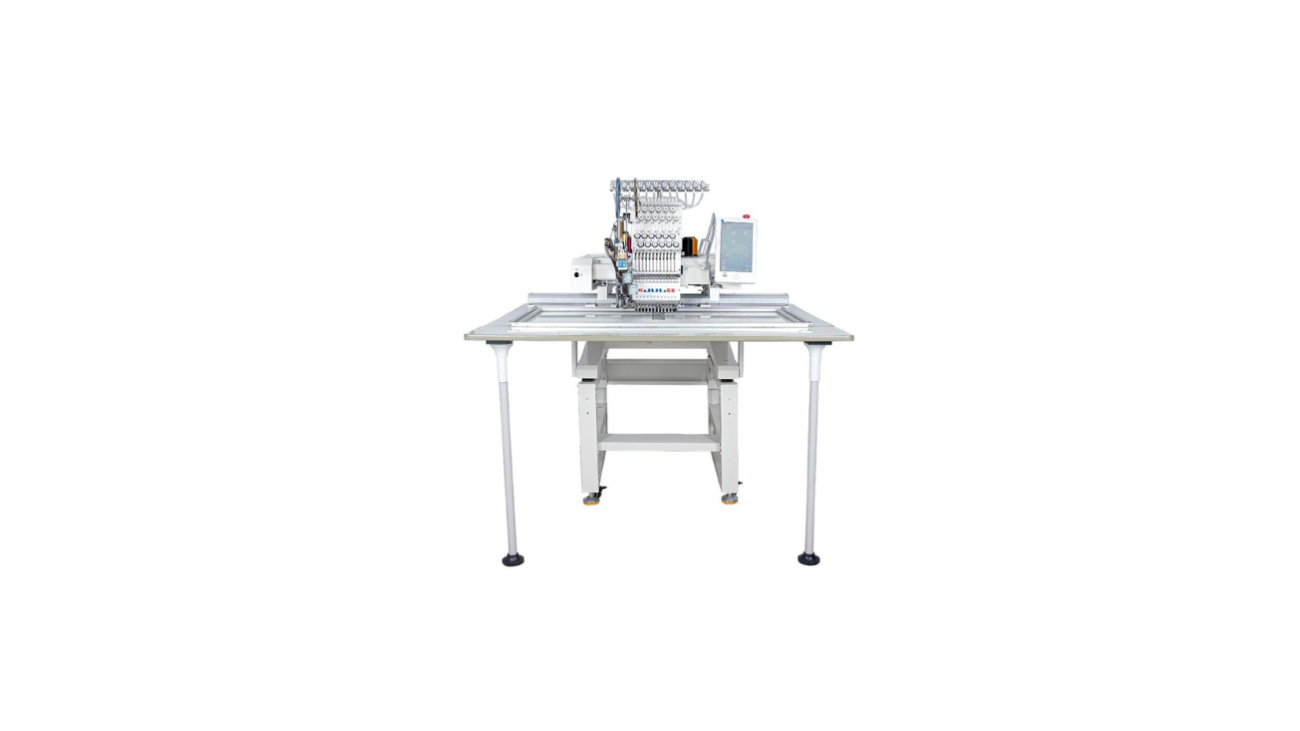
If you plan to produce a high volume of orders or intricate, multi-color designs – a multi-needle machine is essential. The machines such as Julee JL2040-500*1000MM, JL1624-400*600MM, JL2048-500*1200MM  are built for Speed and efficiency

Pros: The game-changer for your productivity. With 6,9, 12 or 15 needles pre-threaded with different colors, the machine automatically switches threads as programmed, allowing you to walk away while a complex design is stitched without interruption.

Essential features to look for when buying

Regardless of which type you choose, the specific features can dramatically impact your experience and quality to your output.

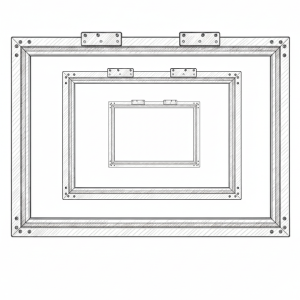
Embroidery area (Hoop Size): :The hoop size determines the maximum size of design you can stitch in one go. Ensure the machines support a variety of hoop sizes including one that can handle your largest anticipated project.

embroidery machine hook area - julee embroidery machine
Photo Credit: Julee Embroidery Hooks

Connectivity: Modern machines offer connectivity via USB, Wi-Fi or lan. This feature allows you to easily transfer your digitised designs from your computer to your machine.

Usability: Look for machines with large, intuitive colour touch screens. Features like on-screen editing, design rotations, and ability to combine designs directly on the screen save valuable time and eliminate the need to go back to your computer for minor adjustment. 

software compatibility: Your machine must be compatible with the standard design formats created by embroidery software brands like Julee for a reliable customer service, robust training materials, and solid warranty to protect your investment. 

The Ultimate Guide to Single-Head Embroidery Machines: From Hobbyist to Home Business
Photo Credit: Julee DAHAO Software

The Workflow: From Design to Finished Product

The process of creating an embroidered item can be broken down into four main steps are,

Step 1: Design & Digitizing

The Ultimate Guide to Single-Head Embroidery Machines: From Hobbyist to Home Business
Photo Credit: Julee Embroidery Machine

Embroidery is not printing; it requires a specialized process called “digitizing.” Then Artwork is converted into a stitch file using dedicated software like DAHAO, where the operator defines the type of stitches (satin, fill, running stitch), density, and color order. This step is where quality begins.

Step 2: Machine Setup

This involves selecting the right stabilizer (backing material that supports the fabric) and “hooping” the fabric and stabilizer together tightly. Proper hooping is critical to prevent wrinkles, shifting, or poor registration of the design.

Step 3: Execution

The Ultimate Guide to Single-Head Embroidery Machines: From Hobbyist to Home Business
Photo Credit: Julee Embroidery Machine

Load the design, select the correct color sequence, thread your needles, and press start. This is the magical part where you watch your design come to life. Your multi-needle machine will automatically stop and trim threads as needed, requiring only minimal supervision.

Step 4: Finishing

The Ultimate Guide to Single-Head Embroidery Machines: From Hobbyist to Home Business
Photo Credit: Julee Embroidery machine

Once the stitching is complete, you remove the hoop and carefully trim away excess stabilizer and any loose threads, leaving a clean, professional finish

Business Viability and Growth Strategies

Single head embroidery machines are the foundation of a profitable home business. The value you add by personalising items often allows for significant profit margins. So you can start as small, focusing on simple items like baby onesies or monogrammed towels, and scale upto larger orders for corporate apparel or school uniforms.

Many successful businesses start with one multi-needle machine and add more as order volume increases. This modular approach allows for flexible production and maximum efficiency.

Conclusion

Whether you’re a creative hobbyist looking for a new artistic outlet or an aspiring entrepreneur ready to launch a home business, a single-head embroidery machine is a powerful investment. You can check JULEE JL2040 here.

By understanding the differences between single-needle and multi-needle models and focusing on essential features, you can make an informed choice that sets you up for success in the exciting world of personalized textiles.